TECHNIQUE
A great steak is mostly about a great sear. That deep, savoury crust — the bit everyone fights over — comes from one thing: high heat meeting a dry surface.
Get that right and the rest is just timing. This guide walks through every step we use in my own kitchen, from choosing the cut to the all-important rest, so you can put a proper restaurant-quality steak on the plate at home.
IN THIS GUIDE
Choosing your steak
Searing rewards a steak with a bit of thickness and fat. A few favourites:
- Ribeye — the most forgiving, thanks to generous marbling that bastes the meat as it cooks. Hard to get wrong.
- Sirloin — leaner, with a good strip of fat along the edge and proper beefy flavour.
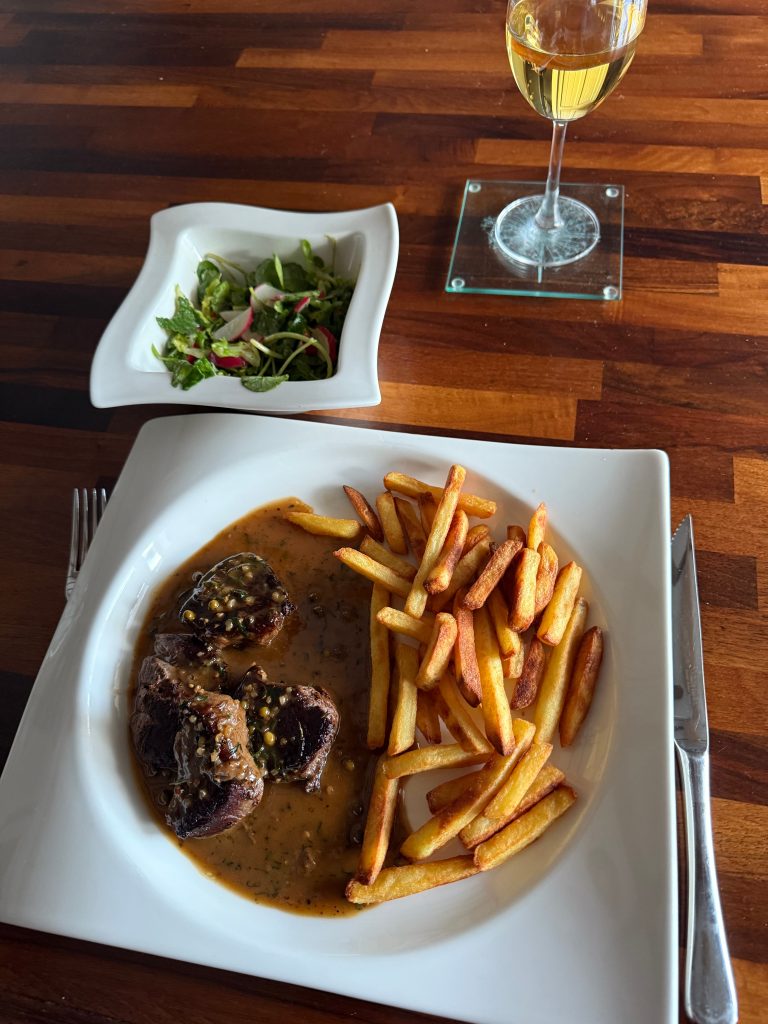
- Fillet — the most tender, very lean, best cooked no further than medium-rare so it does not dry out. Our go-to for a special-occasion plate.
- Rump — bags of flavour for less money; a little firmer in texture.
Whatever the cut, aim for steaks at least 2.5cm (1 inch) thick. Thin steaks overcook before a crust can form. Look for even marbling — those fine threads of fat are flavour and juiciness.
Before you cook
Three small steps make the biggest difference, and all of them happen before the pan gets hot:
- Take the chill off. Leave the steak out for 20–30 minutes to come towards room temperature. A fridge-cold steak cooks unevenly — grey and overdone at the edges before the centre catches up.
- Pat it bone dry. Press both sides with kitchen paper. Surface moisture is the enemy of a crust; a wet steak steams instead of searing.
- Season generously. Salt both sides well with flaky sea salt just before cooking, or a good 40 minutes ahead — never in the few minutes between, when the salt has only drawn moisture to the surface but not yet reabsorbed it. Add black pepper now or after cooking, as you prefer.
Your pan and your fat
Reach for a heavy, oven-safe pan — cast iron or stainless steel. They hold ferocious heat and give it back to the steak steadily. Avoid non-stick for searing: it is not built for the temperatures you need, and you will never get the same crust.
Use an oil with a high smoke point — avocado, groundnut or refined rapeseed. Save the olive oil and butter for later; both burn long before the pan is hot enough.
Get the pan properly hot. It should be shimmering and just starting to smoke. This is the single most common place a home sear falls down — pans are almost always too cool. Be braver with the heat than feels comfortable.
The sear
- Add a thin film of oil to the screaming-hot pan, then lay the steak in away from you to avoid splashes.
- Leave it alone. Do not poke, lift or shuffle it. It needs uninterrupted contact to build a crust — usually 3 minutes for a 2.5cm steak.
- Turn once and cook the other side, around 3 minutes more for medium-rare. Use tongs to sear the fatty edge too, rendering it golden.
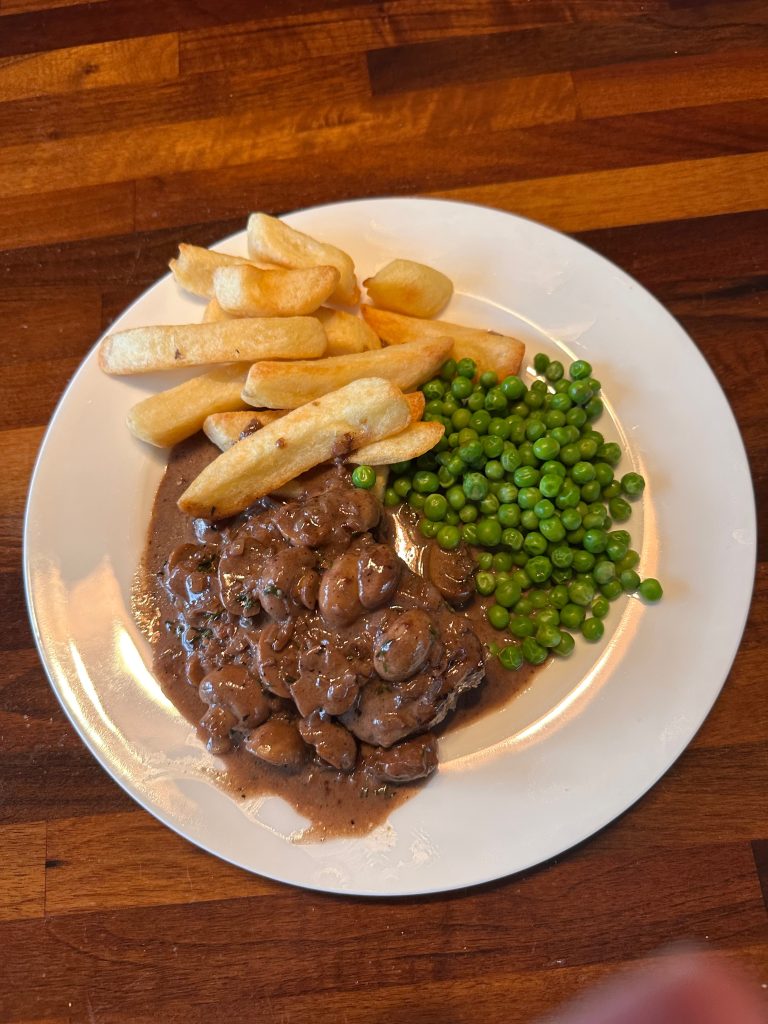
- Finish with a baste. Drop in a knob of butter, a couple of smashed garlic cloves and a few sprigs of thyme. As the butter foams, tilt the pan and spoon it over the steak for the last minute. This is where the flavour and shine come from — the same finish we use in our Filet Steak in Mushroom Sauce and Truffle Linguine with Fillet Steak.
For thicker steaks, sear all over to build the crust, then finish in a hot oven (around 200°C) for a few minutes until they reach your target temperature.
How to tell when it is done
Forget the finger-poke test until you have the feel for it — a meat thermometer is the only reliable way, inserted into the thickest part. Aim for these internal temperatures:
| Doneness | Pull from heat at | Centre |
|---|---|---|
| Blue | 46–49°C (115–120°F) | Cool red, barely warm |
| Rare | 50–52°C (122–126°F) | Cool to warm red |
| Medium-rare | 53–56°C (127–133°F) | Warm pink — the sweet spot |
| Medium | 57–62°C (135–144°F) | Pink throughout |
| Medium-well | 63–67°C (145–153°F) | Faint pink |
| Well done | 68°C+ (155°F+) | No pink |
Pull the steak a few degrees early. It keeps cooking as it rests — carryover heat adds around 3–5°C — so a steak pulled at 52°C settles into a perfect medium-rare.
Rest it — do not skip this
When you cut into a steak straight from the pan, the juices run out and you are left with a drier, paler piece of meat. Resting lets them redistribute. Rest for at least 5 minutes (roughly half the cooking time), loosely covered with foil so it stays warm without steaming the crust soft. Spoon any pan butter over it to serve.
Slice against the grain
Look for the direction the muscle fibres run, and cut across them, not along. Slicing against the grain shortens those fibres and gives you a far more tender bite — especially on firmer cuts like rump and sirloin.
The five most common mistakes
- Cooking it cold — uneven from edge to centre.
- A wet surface — steams instead of searing, so no crust.
- A pan that is not hot enough — the number one culprit.
- Moving it too soon — disturb the steak and the crust never forms.
- Cutting it straight away — all those juices end up on the board.
FAQ
How hot should the pan be? Very. Shimmering and just beginning to smoke. If you can comfortably hold your hand above it, it is not ready.
Should I salt before or after cooking? Salt right before, or at least 40 minutes ahead — never in the short window between, when it draws moisture to the surface but has not reabsorbed.
Which oil is best? A neutral oil with a high smoke point — avocado, groundnut or refined rapeseed. Add butter only at the end.
Cast iron or non-stick? Cast iron or stainless every time. Non-stick cannot take the heat a proper sear needs.
How long should I rest it? At least 5 minutes, or roughly half the cooking time, loosely tented with foil.
What is a reverse sear? Cooking the steak low in the oven first, then searing hard at the end. It is excellent for thick steaks (4cm and over), giving even cooking edge to edge with a quick final crust.
Put it to use
Now that you have nailed the sear, put it straight to work: