France
Buttery pastry, fine sauces and rustic bistro cooking — the art of French cuisine.
About French cuisine
French cooking is the grammar that almost every western kitchen still speaks. The sauces, the cuts, the way a stock is built, the order in which ingredients hit the pan — most of it was written down in France over the last two centuries, and most of it still holds. Beyond the textbook though, there are dozens of regional cuisines: the butter and cream of Normandy, the duck and beans of the south-west, the olive oil and tomatoes of Provence, the fish stews of Marseille.
The defining flavours are richer than Italian, more restrained than British. Butter, shallots, white wine, a good chicken or veal stock, decent mustard, fresh tarragon or thyme. The technique that matters most is building flavour in layers — searing properly, deglazing the pan, reducing slowly, finishing with cold butter so the sauce turns silky. Skip a step and you can taste it.
It’s more approachable at home than its reputation suggests. A proper omelette, a roast chicken with a pan sauce, a quiche, a steak with shallots — these are weeknight dishes once you’ve cooked them a few times. The reward for putting the work in is food that tastes deliberate rather than thrown together.
My France began, oddly, at the office. In 1979 I was picked for a small group taught French before work each morning — half an hour a day, in our own time — until I was fluent, then sent on an immersion course in Belgium where only French was allowed, and where my love affair with frites began. The reward for all that French? A posting to Bahrain, where the language required was Arabic. But France got me back in the end: two years at INSEAD in Fontainebleau, south of Paris, where between the business studies I acquired my love of French cuisine — trying many things, and learning that loving a cuisine does not mean liking all of it.
Key ingredients
Stock these and you can cook French almost any night of the week.
 Unsalted butter
Cold cubes whisked into sauces for that signature glossy finish.
 Shallots
Milder and sweeter than onions — the base of almost every French sauce.
 Dry white wine
For deglazing, braising and finishing — nothing you wouldn’t drink.
 Tarragon & thyme
Tarragon for chicken and fish, thyme for anything braised.
 Dijon mustard
Stirred into vinaigrettes, sauces and crusted onto roasts.
 Good bread
A proper baguette or sourdough — eaten with everything.
Recipes from my kitchen
A handful of French recipes I cook on rotation. All tested in a real kitchen.
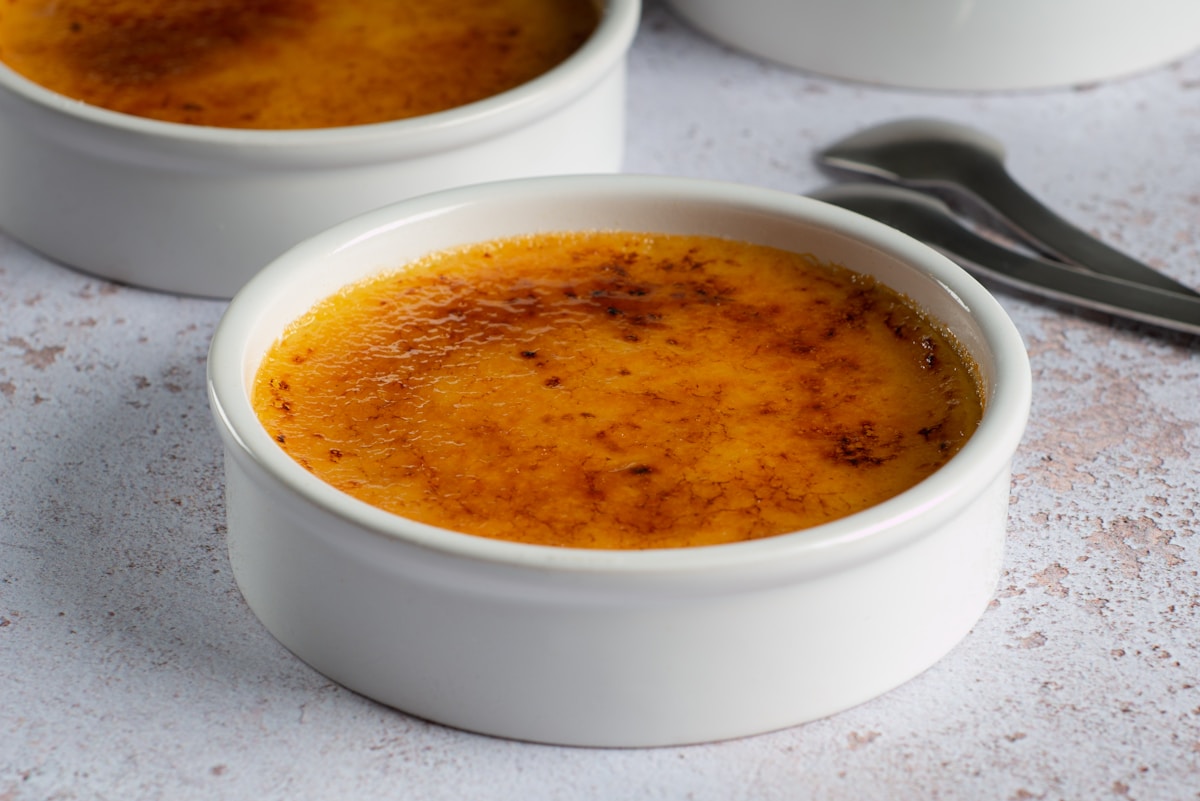
Creme Brûlée
Crème brûlée (pronounced “krem broo-LAY”) is a classic French dessert consisting of a silky custard topped with crisp caramelised sugar.
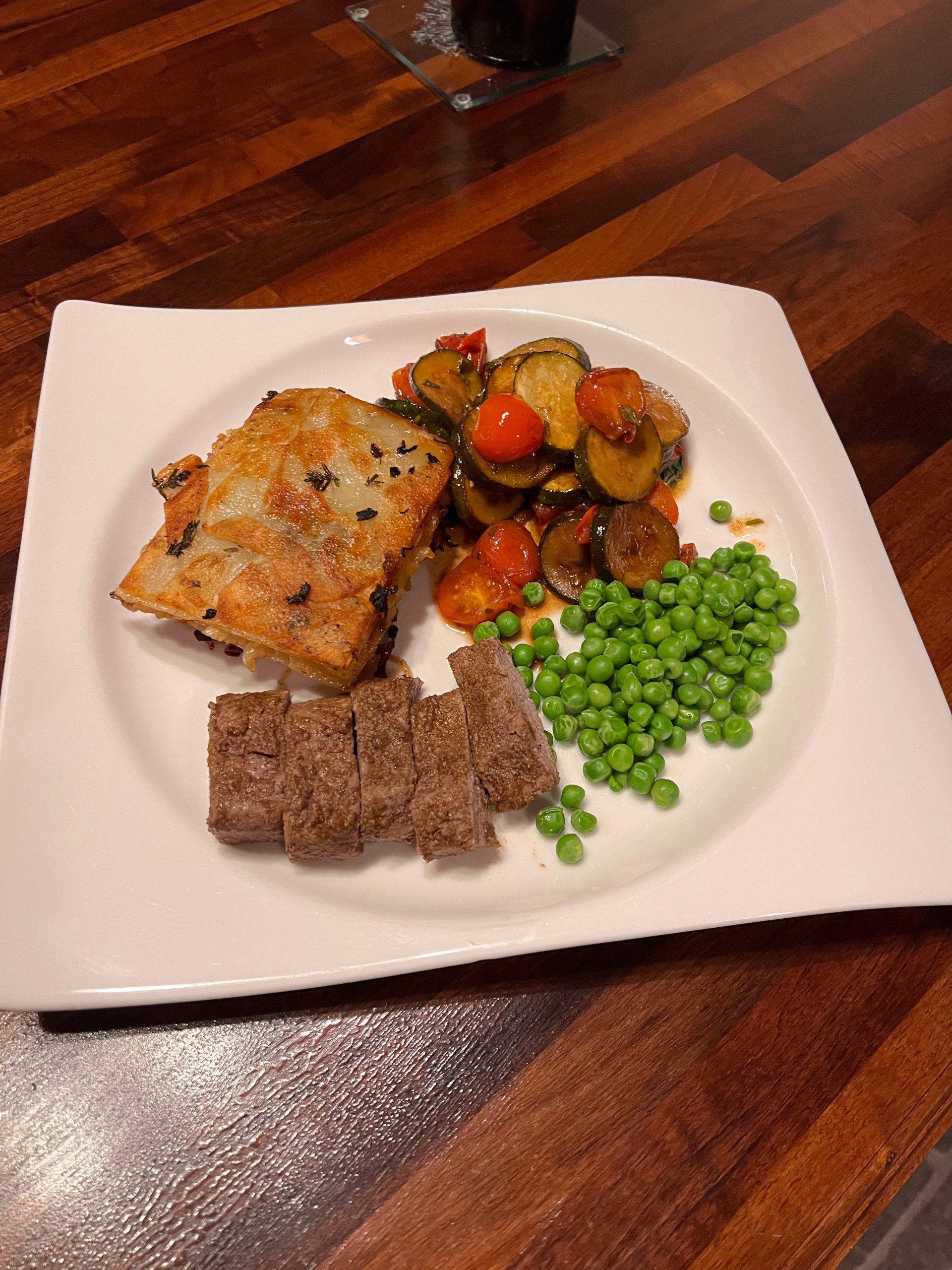
Fillet of Lamb with Courgettes Provençale & Pommes Boulangère
A roasted fillet of lamb is the perfect showstopper, especially when it comes to dinner parties.
