Crème Brûlée
The classic French finish — a cool, silky vanilla custard under a thin, glassy shell of caramelised sugar that cracks under the spoon. It is far simpler than its reputation suggests: a handful of ingredients, a gentle bake, and a moment with a blowtorch.
Why this works
- Cream and yolks, gently baked in a water bath set into a custard that is pure silk, never scrambled.
- The bain-marie keeps the heat even and gentle, so the custard sets softly rather than splitting.
- Demerara, torched at the last minute gives that signature crackly top — coarse sugar caramelises into a proper glassy crust.
Ingredient notes and swaps
- Double cream — the richness is the point; a little milk lightens it just enough. Do not drop to single cream, or it will not set as luxuriously.
- Vanilla bean paste — for the flecks and depth; a split vanilla pod works, or good extract at a pinch.
- Egg yolks — eight is what gives the custard its richness and set. Save the whites for a pavlova or meringues.
- Demerara sugar — coarse, for the top; it caramelises into a thicker, crunchier crust than caster.
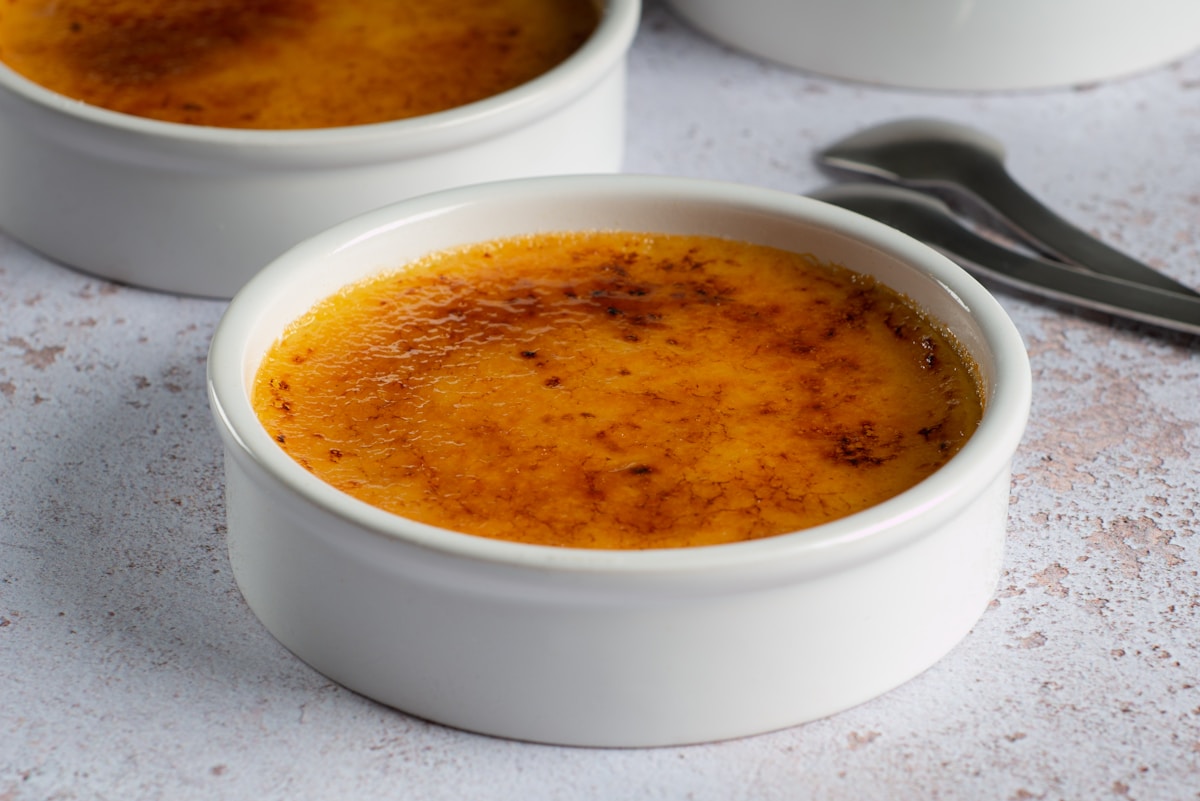
Crème Brûlée
FavouriteIngredients
Method
- Preheat the oven to 120°C (100°C fan).
- Gently warm the cream, milk and vanilla paste together in a saucepan until steaming but not boiling.
- In a bowl, whisk together the egg yolks and caster sugar, then whisk in the warm cream mixture.
- Pour into 4 ramekins set in a roasting tin, then pour in enough boiling water to come halfway up their sides to make a bain-marie.
- Bake for about 25 minutes, until just set with a slight wobble in the centre.
- Leave to cool, then chill in the fridge for at least 1 hour.
- Sprinkle the demerara sugar evenly over each, then caramelise with a blowtorch (or carefully under a hot grill) until a crisp, golden caramel top forms.
Nutrition
Notes
The custard should still have a slight wobble in the centre when removed from the oven, as it will firm up further as it cools.
Tried this recipe?
Let us know how it was!Tips for success
- Warm the cream gently — steaming, not boiling — before whisking it into the yolks.
- Do not over-bake; the custards should still have a slight wobble in the centre when they come out.
- Chill thoroughly before brûléeing, so the cold custard contrasts with the warm caramel.
- Brûlée just before serving so the top stays crisp; keep the flame moving for an even, deep gold.
Make ahead, storage and reheating
- Make ahead: Ideal — bake and chill the custards up to two days ahead; brûlée the tops just before serving.
- Storage: Keep covered in the fridge for up to 2 days (before the sugar top goes on).
- Reheating: None — it is served cold with a warm caramel top.
What to serve it with
- It stands alone, but a few fresh berries or a thin almond tuile alongside is never unwelcome.
FAQ
Why a water bath? It cooks the custard gently and evenly so it sets silky rather than splitting.
How do I know when it is set? It should still wobble slightly in the centre — it firms up as it chills.
Can I make it ahead? Yes — bake and chill up to two days ahead, then brûlée just before serving.
No blowtorch? Caramelise the sugar carefully under a very hot grill, watching it closely.
Try these next
More puddings to try:
This is a taste of French cooking. Explore the whole cuisine — its story, key ingredients and more of our recipes — in the Kitchen Atlas.
Explore French in the Kitchen Atlas →