Penne Primavera
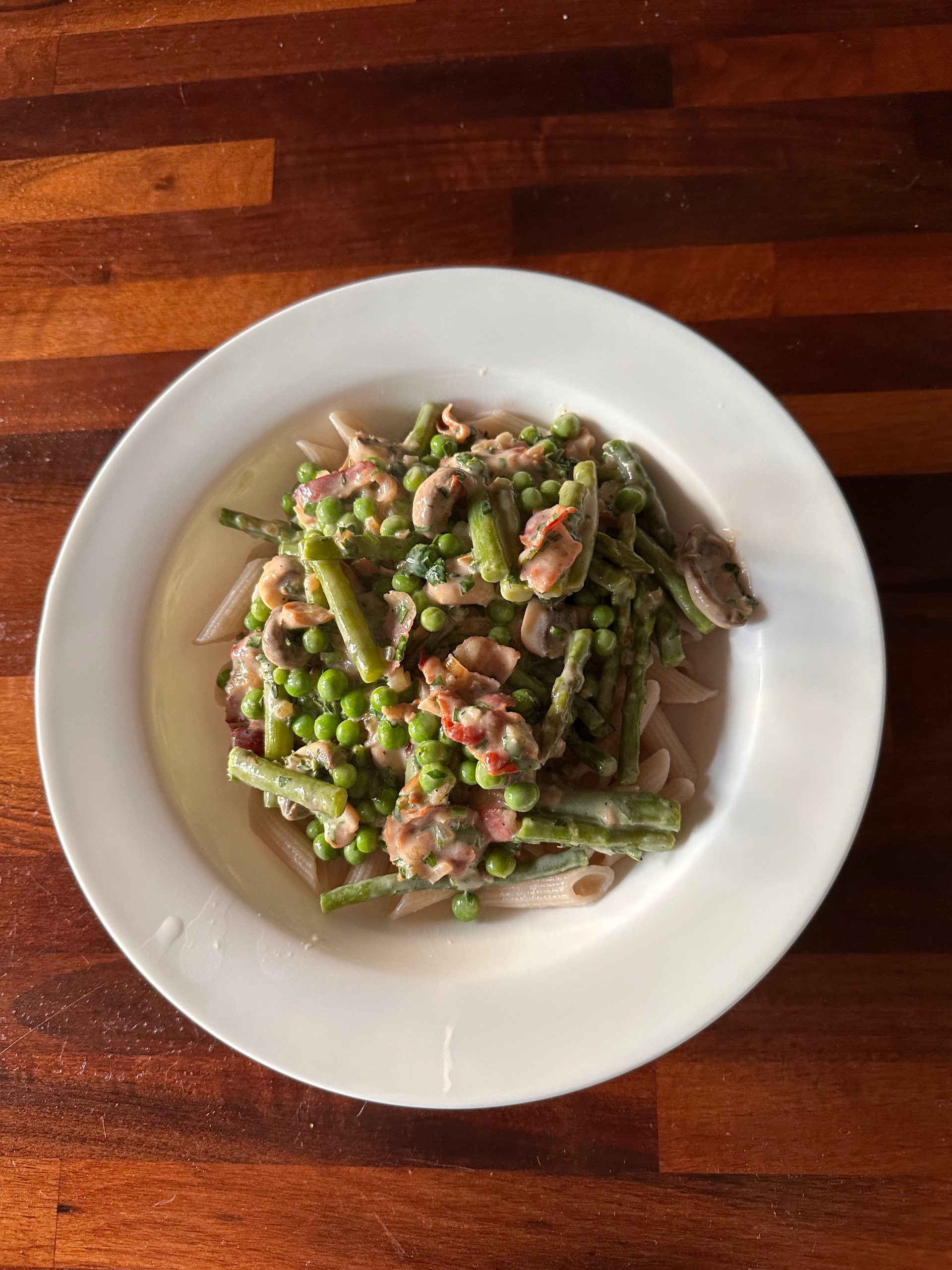
A bright, spring-vegetable pasta — penne tossed with asparagus, green beans and peas in a light, creamy white wine sauce, with pancetta and mushrooms for savoury depth. Fresh, quick and full of the colours of spring. Primavera means spring, and this tastes of it.
What is pasta primavera?
Pasta primavera is a bright, vegetable-forward pasta dish — primavera is Italian for “spring” — built around whatever young, tender vegetables are in season. There is no single fixed recipe: some cooks dress the vegetables with little more than olive oil and lemon, while others bind them in a light, creamy sauce. Ours takes the second road — asparagus, green beans and peas blanched so they keep their bite, then folded through a silky white wine and cream sauce built on pancetta, garlic and mushrooms. Penne is our pasta of choice, though any short pasta works just as well.
From Recipes to Bank — the original ring binder where this site began, circa 2008.
Why this works
- Blanching the vegetables briefly keeps them crisp, green and full of flavour.
- Pancetta browned slowly releases its savoury fat and gives the sauce real depth.
- A light white wine and cream sauce dresses rather than drowns the vegetables.
Ingredient notes and swaps
- Penne or another short pasta — it catches the vegetables and sauce.
- Spring vegetables — asparagus, green beans and peas; broad beans or courgette work well too.
- Pancetta — smoked bacon lardons make a fine swap.
- Dry white wine and single cream — the light, silky base of the sauce.
- Parsley and thyme — fresh herbs to lift it at the end.
A note on the vegetables: blanch them for a minute in the pasta water before the pasta goes in, lift them out, and add them back at the very end. They stay bright green and keep their bite — and you have used one pan fewer.
Penne Primavera
FavouriteIngredients
Method
- Cook the Penne Pasta in slightly salted boiling water according to the packet instructions
- Put the Asparagus stalks, Green Beans and Peas into a saucepan of slightly salted boiling water.
- Bring back to the boil and cook for 3 - 4 minutes
- Add the Asparagus tips into the pan and cook for a further 2 minutes
- Drain thoroughly
- Heat the Oil in a saucepan and add the Pancetta, cook until it releases oil and starts to brown
- Add the Onion and Garlic and cook for 5 minutes, until softened
- Add the Mushrooms and continue to cook for another 3 minutes
- Stir in the Flour, cook for 1 minute
- Gradually pour in the White Wine stirring continuously and bring to the boil.
- Simmer until the sauce starts to thicken
- Stir in the Cream and Herbs, seasoning to your own taste
- Add the cooked vegetables and heat gently for 2 minutes
- Divide the Pasta on to two serving plates and spoon the sauce mixture over the top
Nutrition
Notes
Allow the pancetta to brown slowly to develop a deep, savoury base.
When adding wine, pour gradually while stirring to prevent clumping.
Tried this recipe?
Let us know how it was!Tips for success
- Do not overcook the vegetables — they should stay bright and just tender.
- Save some pasta water to loosen and bind the sauce.
- Add the most delicate vegetables last so they keep their bite.
- Let the pancetta brown properly before the onion goes in — that colour is flavour.
Make ahead, storage and reheating
- Best fresh — a spring vegetable pasta is best eaten straight away.
- Get ahead — prep and blanch the vegetables ahead so it comes together fast.
- Storage — leftovers keep a day; lovely cold as a pasta salad.
What to serve it with
- On its own as a generous main, or with a simple green salad.
- A crisp, dry white wine — the same one that went into the sauce.
FAQ
Which vegetables should I use? Whatever is freshest and in season — peas, asparagus, courgette, beans and broccoli all work.
Can I make it vegetarian? Yes — leave out the pancetta and cook the onion, garlic and mushrooms in olive oil; a squeeze of lemon at the end lifts the sauce.
Can I use frozen vegetables? Frozen peas and beans are fine; add them near the end so they stay bright.
Try these next
Build big flavour from a well-stocked store cupboard
This is a taste of Italian cooking. Explore the whole cuisine — its story, key ingredients and more of our recipes — in the Kitchen Atlas.
Explore Italian in the Kitchen Atlas →