Ingredients
Method
- Tip the flour and salt into a large bowl and make a well in the centre.
- Crack in the eggs and add a good splash of the milk. Whisk from the centre outwards, gradually drawing in the flour, to make a smooth, thick paste with no lumps.
- Whisk in the rest of the milk a little at a time until you have a smooth batter the consistency of single cream. Whisk in the melted butter.
- Cover and rest the batter for 30 minutes at room temperature. Give it a stir before using; it will have thickened slightly, so loosen with a splash of milk if needed.
- Place a 20cm non-stick frying pan over a medium-high heat. Add a small knob of butter and swirl to coat, then wipe out the excess with kitchen paper; you want the barest film.
- Pour in a small ladleful of batter, immediately tilting and swirling the pan so it runs into a thin, even circle. Cook for about a minute, until the edges lift and the underside is golden and lacy.
- Loosen the edges, then flip, with a palette knife or, if you are feeling brave, a flick of the wrist, and cook the second side for 30 seconds or so.
- Slide onto a warm plate and repeat, stacking as you go. Keep them warm under foil, or in a low oven, while you finish the batch.
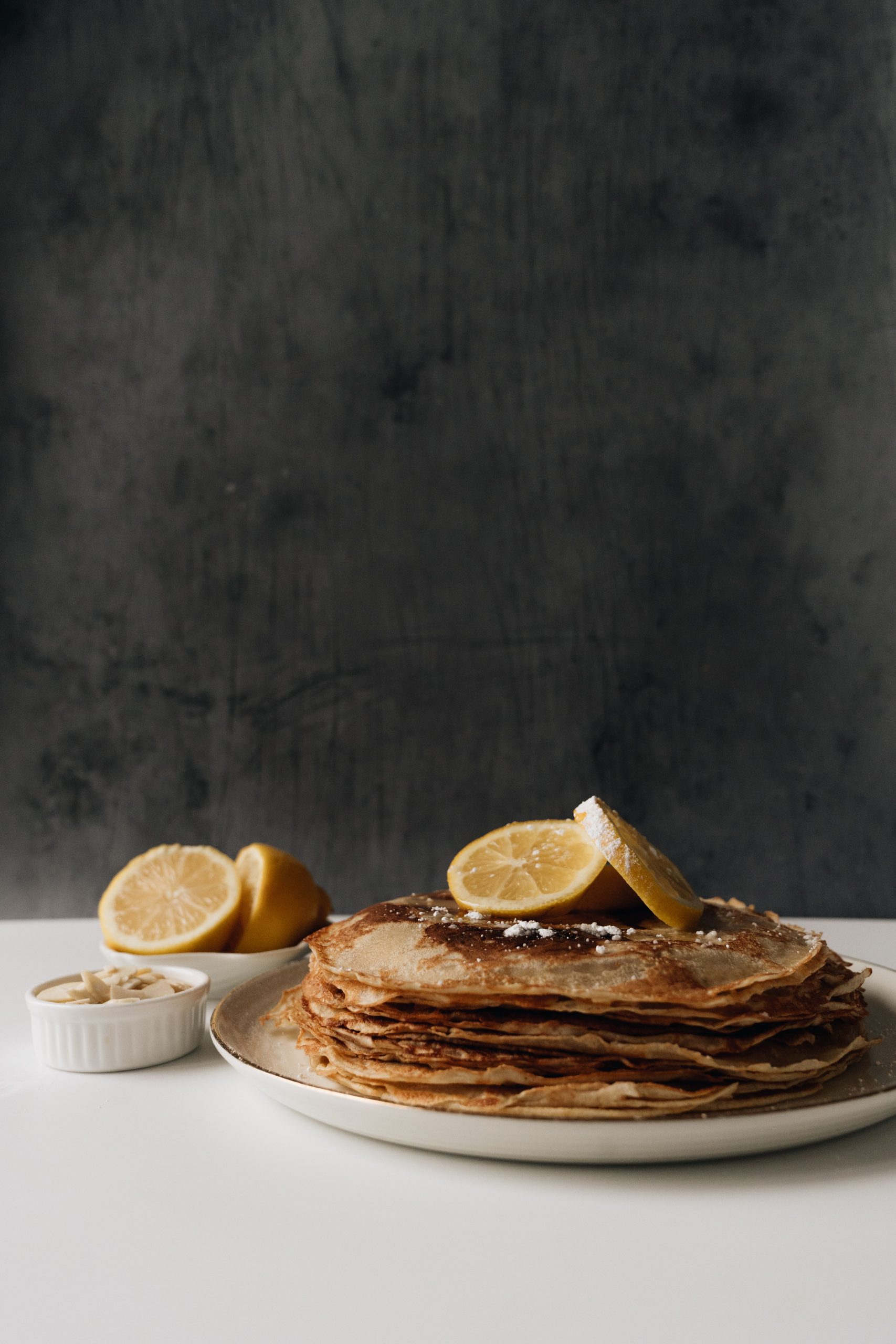
- Serve straight away with your chosen topping. The classic: a squeeze of lemon, a scatter of caster sugar, rolled up and eaten at once.
Nutrition
Notes
Makes about 8 pancakes. The batter can be made a few hours ahead and kept covered in the fridge; loosen with a little milk before using. Cooked pancakes keep, stacked between squares of greaseproof, for two days in the fridge or up to two months in the freezer.