Gingerbread
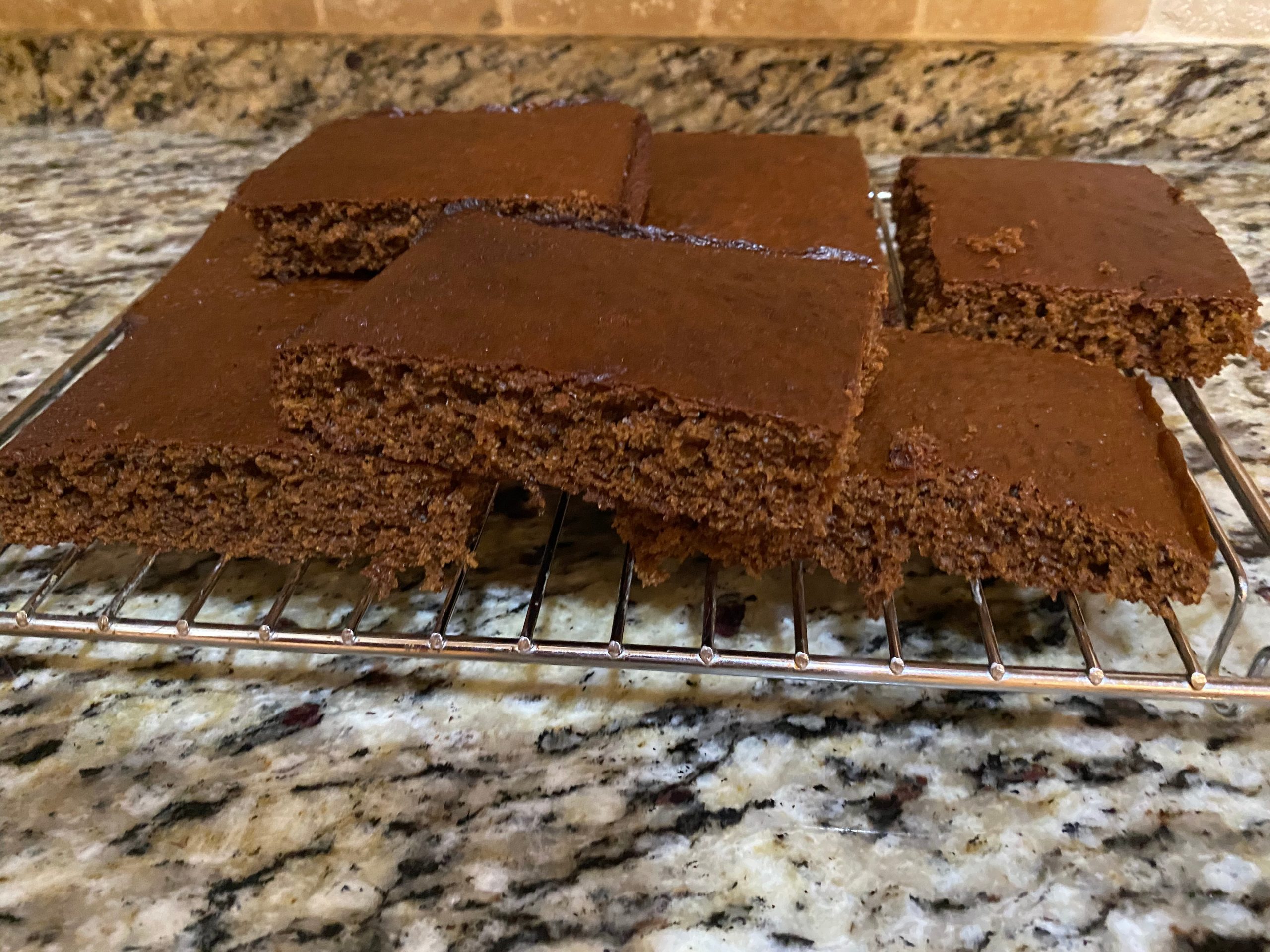
A dark, sticky gingerbread with real depth — black treacle and golden syrup for that moist, almost fudgy crumb, and enough ground ginger to give a proper warm kick. It keeps beautifully and only improves after a day or two, which makes it an ideal make-ahead bake for autumn and Christmas.
Why this works
- Melting the butter, sugars, treacle and syrup together gives a loose batter that bakes into a moist, tender crumb rather than a dry sponge.
- A mix of ground ginger and warm spice builds flavour in layers — the ginger up front, cinnamon and clove rounding it out.
- Resting the cake for a day or two lets the treacle work through, turning it stickier and darker as it sits.
Ingredient notes and swaps
- Black treacle — the source of the dark colour and bittersweet depth. Do not swap it all for golden syrup or you lose the character; a mix of the two is ideal.
- Golden syrup — brings moisture and a gentle sweetness that balances the treacle.
- Ground ginger — be generous. For extra heat and texture, stir in a little chopped stem ginger.
- Unsalted butter — so you control the seasoning; a pinch of salt in the batter sharpens the spice.
- Self-raising flour — or plain flour with baking powder and a little bicarbonate of soda, which reacts with the treacle for a good rise.
Gingerbread
FavouriteIngredients
Method
- Preheat the oven to 180°C
- Measure the Flour, Bicarbonate, Ginger and Mixed Spice into a large bowl.
- Measure the Butter, Treacle, Golden Syrup and Sugar into a small saucepan and heat gently until the butter has just melted
- Set aside and cool a little.
- Pour the mixture from the saucepan into the bowl of dry ingredients
- Add the beaten egg and beat with a wooden spoon until combined
- Gradually add the milk, beating to make a smooth batter.
- Pour the batter into the prepared tin and bake for about 35 minutes or until dark golden and springy to the touch
- Cut into pieces to serve
- Preferably with a slice of red cheddar
- Wrapped tightly, this keeps for up to a week
Nutrition
Notes
When adding the milk, incorporate it gradually to ensure a smooth batter without lumps. Rushing this step might leave you with an uneven texture in your finished gingerbread.
Keep a close eye on the gingerbread while it bakes. Overbaking will result in a dry, crumbly cake, so check for that springy-to-the-touch consistency to ensure it remains wonderfully moist inside.
Tried this recipe?
Let us know how it was!Tips for success
- Weigh the treacle and syrup straight on top of the melted butter — they slide off the scales far more easily once the pan is warm and greasy.
- Do not overbake: a skewer should come out with a few moist crumbs. Gingerbread firms up considerably as it cools.
- Line the tin well and let the cake cool completely before turning out — it is fragile while warm.
- Wrap and store for at least a day before cutting; the flavour and stickiness improve dramatically.
Make ahead, storage and reheating
- Make ahead — better made one to three days in advance; wrap tightly in baking paper and foil once cool.
- Storage — keeps in an airtight tin for up to a week, often longer.
- Freezing — freezes well for up to three months, whole or in slices; thaw at room temperature.
What to serve it with
- A thick slice with a pot of tea is the classic. For pudding, warm it gently and serve with custard or vanilla ice cream.
- A little lemon icing drizzled over the top cuts the richness beautifully.
FAQ
Why is my gingerbread dry? Usually overbaking or too much flour. Weigh carefully and pull it from the oven when a skewer shows moist crumbs.
Can I make it ahead for Christmas? Absolutely — it is designed for it. Made a few days ahead and well wrapped, it only improves.
Can I add stem ginger? Yes. A couple of chopped balls of stem ginger add lovely pockets of heat and a gentle chew.
Try these next
Master the baking basics — tins, temperatures and store-cupboard staples

This is a taste of British cooking. Explore the whole cuisine — its story, key ingredients and more of our recipes — in the Kitchen Atlas.
Explore British in the Kitchen Atlas →