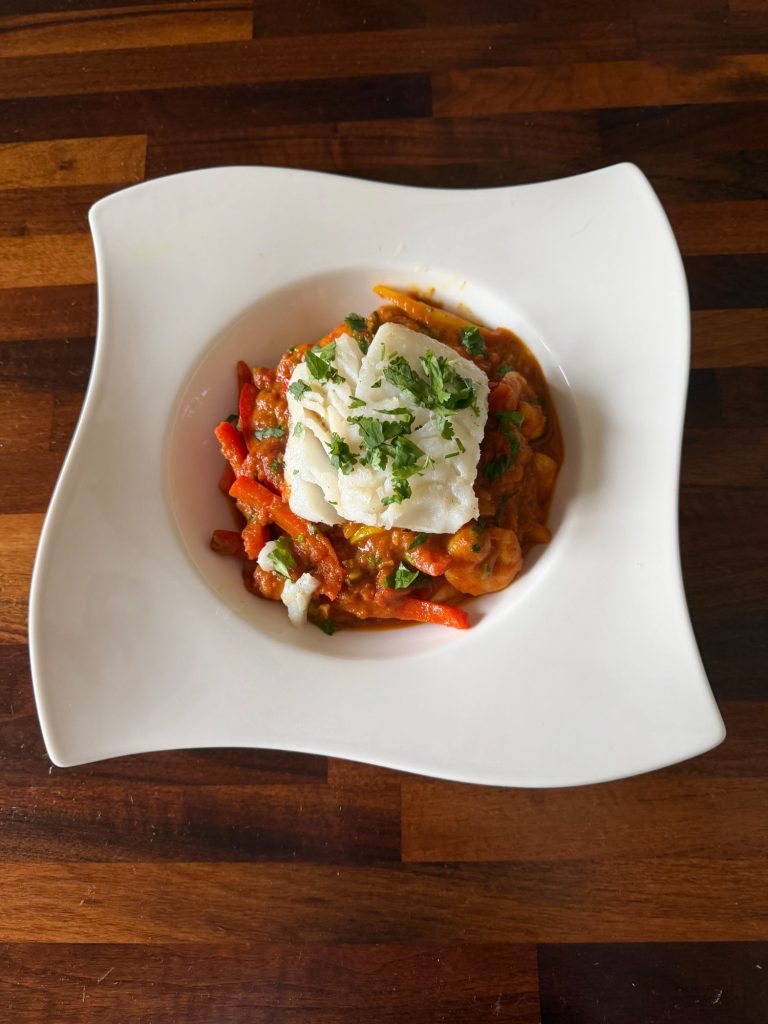
Salmon and Cauliflower Curry
A lighter, brighter curry that pairs flaky salmon with tender cauliflower in a tomato base sharpened with nigella seeds, mustard and a squeeze of lemon. The fish is flash-fried and folded in at the end, so it stays in generous chunks rather than breaking apart. It is proof that a curry need not be heavy to be deeply flavoured.
Why this works
- Cooking the tomatoes hard with the spices until the oil separates builds a deep, caramelised base — the single most important step for flavour.
- Par-boiling the cauliflower means it finishes tender in the sauce without overcooking.
- Frying the salmon separately, then folding it in, keeps the pieces intact and prevents the fish from disintegrating.
- Nigella seeds and English mustard give a savoury, faintly sharp lift that stops the dish tasting flat.
Ingredient notes and swaps
- Salmon is forgiving and rich, but any firm white fish — cod, haddock, pollock — works just as well; add a minute or two for thicker fillets.
- Nigella seeds (kalonji) bring the signature note; try not to substitute.
- A little brown sugar balances the acidity of the tomatoes — add it to taste.
- Fold through a handful of spinach at the end for extra greens.
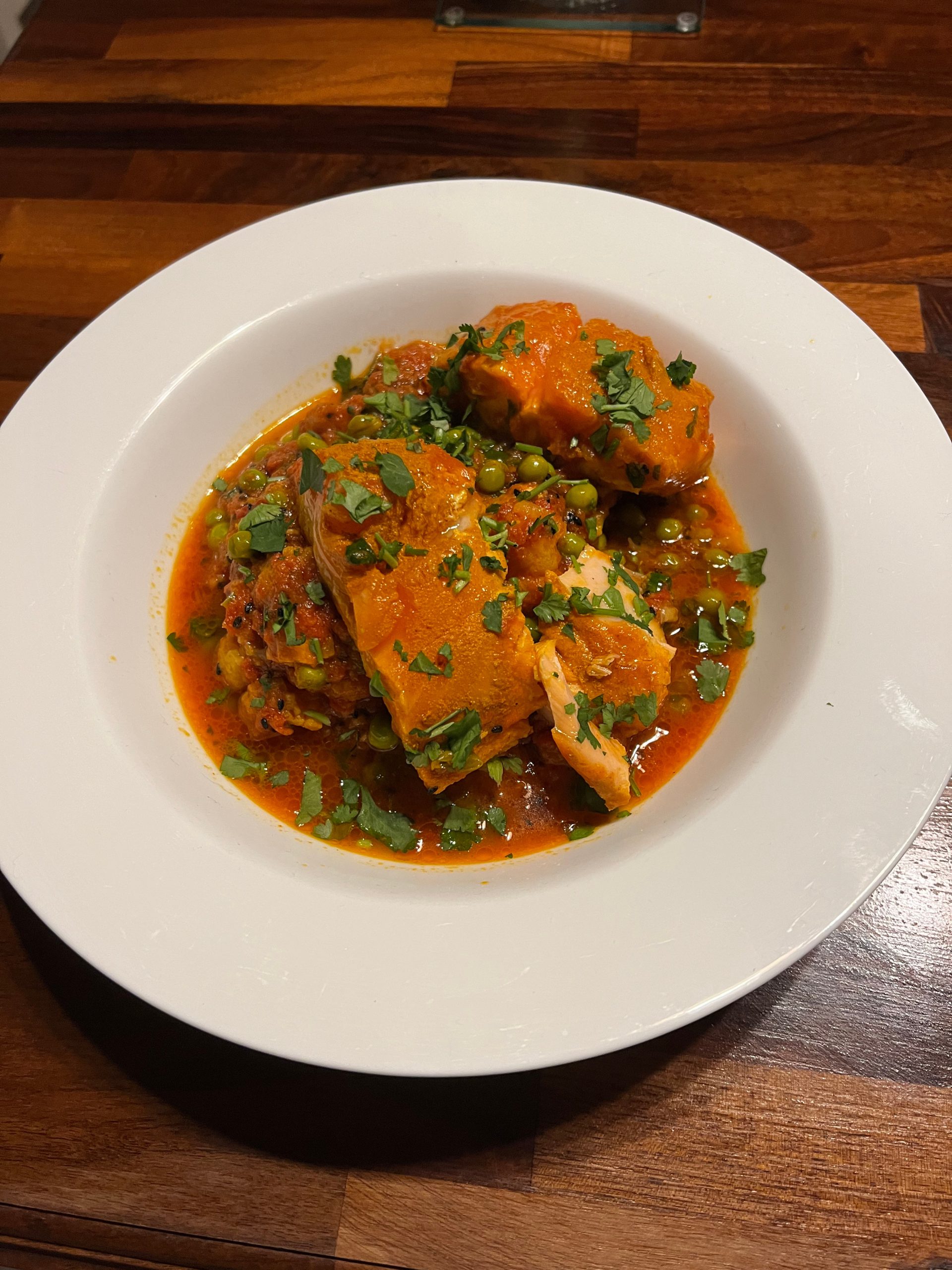
Salmon and Cauliflower Curry
FavouriteIngredients
Method
- Par boil the Cauliflower in boiling salted water for about 3 minutes
- Put half the oil in a large wok and when hot add the Nigella Seeds-fry for 30 sec
- Then add the green chillies
- As soon as they start to fry a little, turn the heat to medium and add the Chopped Tomatoes, 1 Tsp Turmeric, the Chilli Powder and cook the tomatoes with the spices for 5 -8 minutes on a medium heat until they start to brown and the oil comes out of them.
- Now add the Water, salt, Sugar and the Cauliflower
- Simmer until the cauliflower is tender
- Add the Peas, Mustard and the Coriander Powder, the Lemon Juice and half the Coriander
- Stir through and set aside
- Meanwhile rub the chunks of Salmon lightly with the remaining 1Tsp of Turmeric and a good pinch of Sea Salt
- Set a large non stick frying pan over a medium high heat with the remaining oil
- When hot, flash fry the Salmon and transfer the fish to the Cauliflower curry pan
- Return to a medium low heat and simmer for 6-8 minutes or until the salmon is just cooked through
- Do not over stir or disturb too much otherwise the salmon will break apart
- Finish with the rest of the Coriander and check the Salt levels.
Nutrition
Notes
Salmon is delicate and can easily flake apart if handled too vigorously. Gently incorporate it into the curry and avoid excessive stirring to maintain the integrity of the fish pieces.
Tried this recipe?
Let us know how it was!Tips for success
- Cook the tomatoes and spices thoroughly until the oil releases; this signals a properly built base, so do not rush it.
- Handle the salmon gently and avoid over-stirring, or the pieces will break up.
- Check the salt at the end; a fish curry needs enough to carry the flavour.
Make ahead, storage and reheating
- The cauliflower base can be made a day ahead and reheated, with the salmon fried fresh and folded in just before serving. Once the fish is in, eat the same day and reheat very gently to avoid breaking it up. It is not suitable for freezing once the salmon is added.
What to serve it with
- Plain basmati rice to soak up the sauce, warm flatbreads, and a cucumber raita. A wedge of lemon at the table brightens each bowl.
FAQ
Can I use a different fish? Yes — any firm white fish works beautifully; keep the pieces chunky.
Why did my salmon break apart? It was likely stirred too much; fold it in gently and let it simmer undisturbed.
Can I make it dairy-free? It already is — there is no cream or yoghurt in the curry itself.
How do I deepen the flavour? Give the tomatoes longer over the heat until the oil separates and they darken.
Try these next
Get to grips with the spices behind it in our How to use spices guide, travel through India in the Kitchen Atlas, browse the Curry Night collection, then cook more:
This is a taste of Indian cooking. Explore the whole cuisine — its story, key ingredients and more of our recipes — in the Kitchen Atlas.
Explore Indian in the Kitchen Atlas →