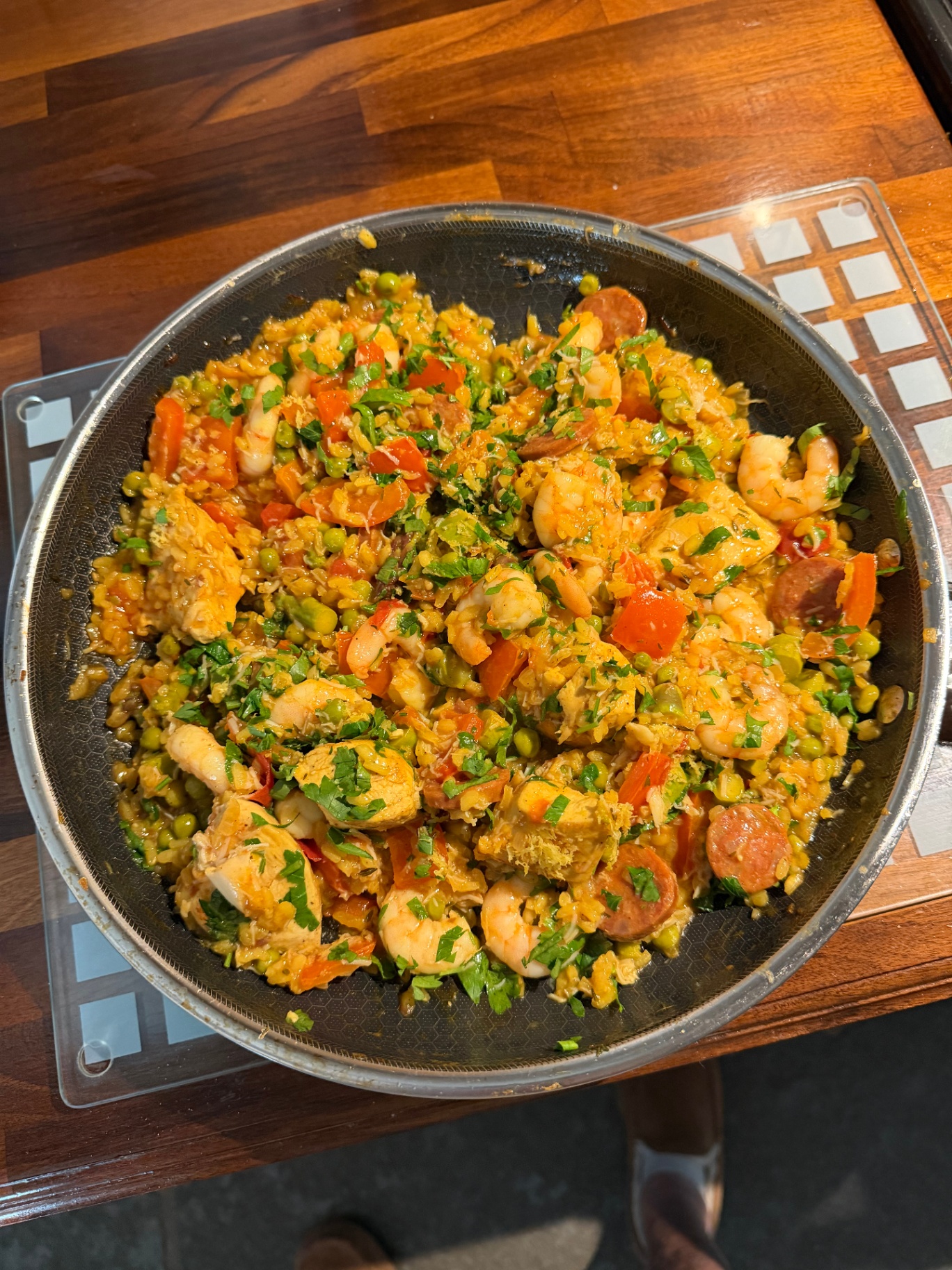
Our Paella
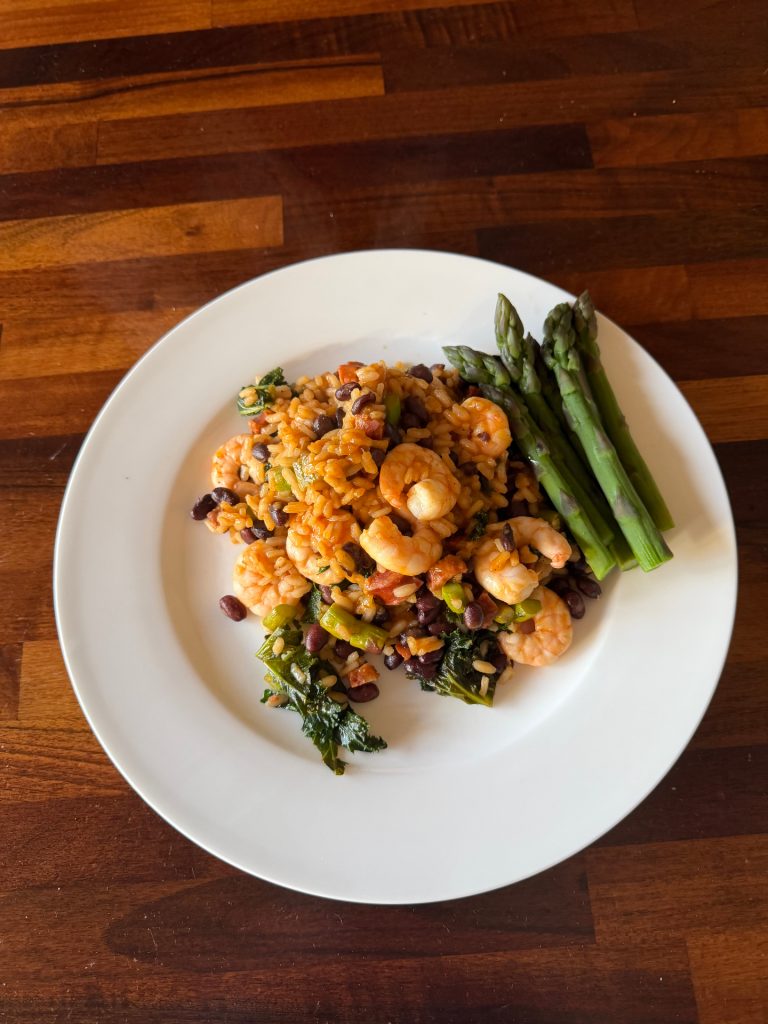
A one-pan taste of Spain — chicken and chorizo with peppers, saffron rice and king prawns, all cooked together until the rice drinks up the smoky, golden stock. It is a generous, sociable dish made for sharing straight from the pan.
From Recipes to Bank — the original ring binder where this site began, circa 2008.
Why this works
- Chorizo and paprika lay down a smoky, paprika-red foundation that flavours the whole pan.
- Saffron and a good stock give paella its golden colour and gentle, savoury perfume.
- Cooking the rice in the pan, undisturbed lets it absorb all that flavour and, at the base, form the prized lightly-crisp layer.
Ingredient notes and swaps
- Paella rice — short-grain soaks up the stock best; a long-grain works at a pinch but will not be quite as plump.
- Chorizo — the smoky, paprika-rich heart of the dish; cooking chorizo gives the best oil.
- Saffron — a few strands are plenty for colour and aroma; do not overdo it.
- King prawns — added near the end so they stay juicy; mussels or squid are lovely additions.
Our Paella
FavouriteIngredients
Method
- Place Chicken Stock and Saffron strands in a saucepan and bring to the boil.
- Turn heat off and leave for 20 minutes for flavours to combine
- Cut the Chicken into bite sized pieces.
- Heat a splash of Olive Oil in a large Paella Pan, then add Onions, diced Red Peppers, Garlic, Chillies and Thyme and cook over a medium heat for 5 minutes until vegetables start to soften
- Season the Chicken with Salt & Black Pepper; add to the pan with Chorizo and Paprika.
- Fry, stirring frequently, over a high heat to lightly brown the Chicken pieces
- Tip in the Paella Rice and bay Leaves and stir continuously for 2-3 minutes, then add the White Wine and Lemon Juice before pouring in enough of the Saffron infused Chicken Stock to cover the Paella Rice by about 1 cm
- Add the Tomatoes and season well with Salt & Black Pepper.
- Bring to the boil and then simmer for about 10-12 minutes
- Stir in the Peas and Asparagus and cook for a further 3-4 minutes
- Add the Prawns with a little more Stock or boiling water if needed and stir through.
- Cook over a medium heat for 2 minutes until the Prawns are warmed through
- Add the Crabmeat and cook for a further 1 minute
- Taste and adjust the seasoning
- Take the pan off the heat, sprinkle over the Lemon zest and Parsley and cover with foil.
- Leave to stand for 5 minutes to allow the flavours to combine
- Drizzle with a little Olive Oil and serve immediately, scattered with cayenne Pepper, Red Pepper strips and Lemon wedges
Nutrition
Notes
Once the paella comes to a boil, reduce the heat to a gentle simmer. Over-boiling can cause the rice to cook unevenly and break down. The goal is a steady, gentle cooking process.
Covering the paella with foil allows the rice to steam gently and the flavours to meld beautifully. This resting period is essential for achieving a perfect texture and a well-rounded dish.
Tried this recipe?
Let us know how it was!Tips for success
- Brown the chicken and chorizo first, so their flavour and oil season the rice.
- Toast the rice briefly in the oil before the stock goes in.
- Resist stirring once the stock is in — that is how the rice cooks evenly and forms the crust at the base.
- Add the prawns near the end so they stay plump, and rest the pan a few minutes before serving.
Make ahead, storage and reheating
- Make ahead: Best cooked fresh, but the base of chicken, chorizo and peppers can be prepped ahead.
- Storage: Keeps a day in the fridge; cool quickly, especially with seafood.
- Reheating: Warm gently with a splash of stock, only once and until piping hot throughout.
What to serve it with
- Lemon wedges to squeeze over, crusty bread, and a simple green salad. A glass of cold Spanish white or a chilled rosé.
FAQ
What rice should I use? Short-grain paella rice for the plumpest result; long-grain works at a pinch.
Do I stir it? No — leave it once the stock is in so the rice cooks evenly and crisps at the base.
Can I add other seafood? Yes — mussels, clams or squid are all classic; add them so they cook through without toughening.
No saffron? A little extra paprika keeps the colour and warmth, though saffron is the authentic note.
Try these next
Get the most from your spice rack with our How to use spices guide, and explore more Spanish cooking in the Spain chapter of our Kitchen Atlas — then put it to work:
This is a taste of Spanish cooking. Explore the whole cuisine — its story, key ingredients and more of our recipes — in the Kitchen Atlas.
Explore Spanish in the Kitchen Atlas →