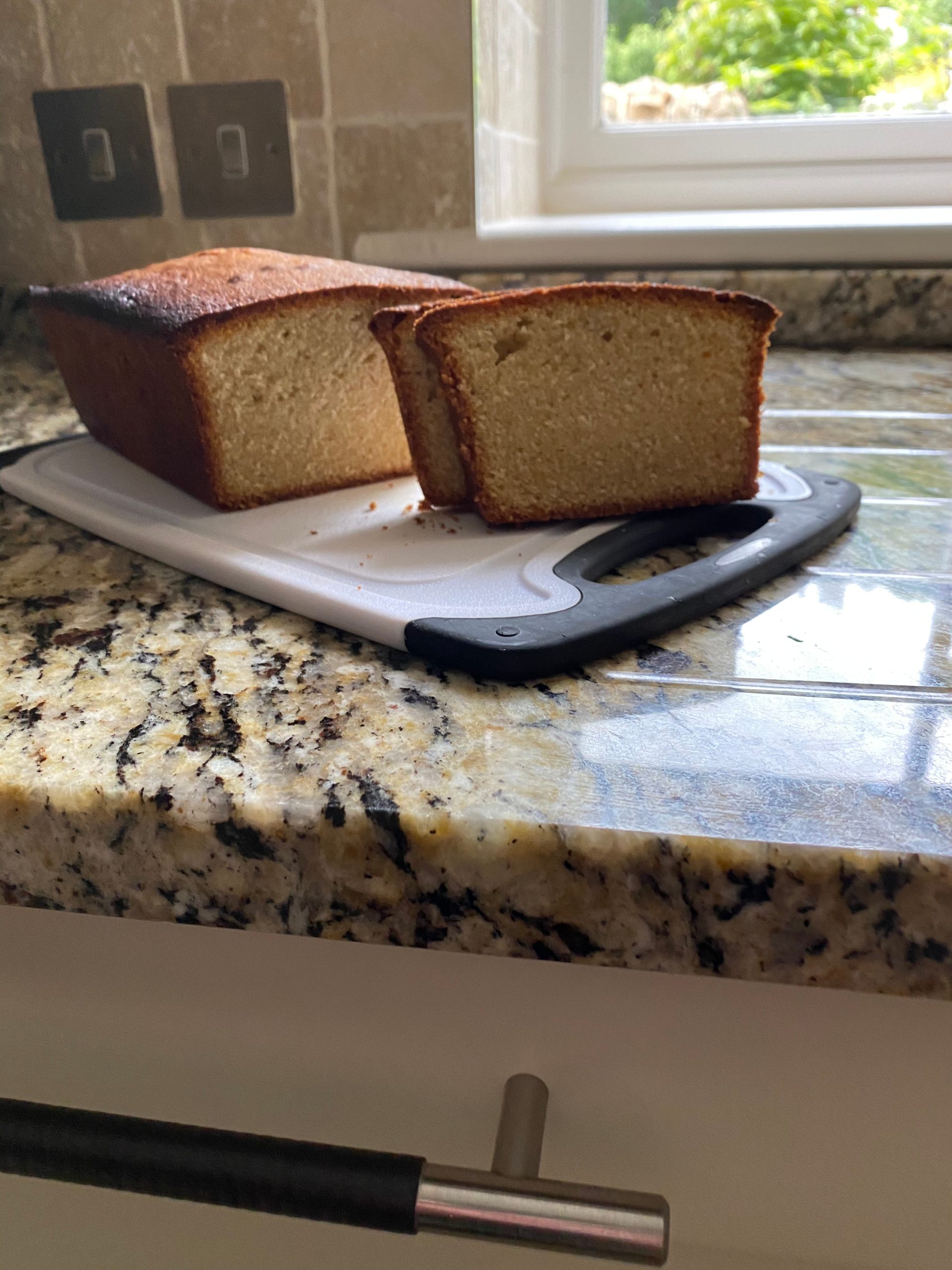
Madeira Loaf Cake
Madeira cake is a British classic that has nothing to do with the island and everything to do with tradition: a buttery, close-textured loaf, gently perfumed with lemon and vanilla, that was once served with a glass of Madeira wine. Ground almonds keep it moist and tender, and its firm, even crumb makes it the ideal cake for slicing, toasting, or building into something grander.
Why this works
- The butter and sugar are creamed well. Beating in plenty of air is what gives Madeira its light-yet-close crumb, so this step is worth your patience.
- Ground almonds alongside the flour. They add moisture and a subtle richness that keeps the cake from drying out.
- Lemon zest and vanilla. A quiet, classic flavouring that lets the buttery crumb shine rather than overwhelming it.
Ingredient notes and swaps
- Butter. Use good unsalted butter at room temperature; it is the backbone of both the flavour and the texture.
- Sugar. Golden caster gives a faint toffee note; ordinary caster is perfectly fine.
- Ground almonds. They keep the cake moist. Replace with the same weight of flour for a nut-free loaf, though it will be a little drier.
- Lemon. The traditional flavouring, though a scrape of orange zest makes a pleasant change.
Madeira Loaf Cake
FavouriteIngredients
Method
- Heat oven to 170C
- Butter and line the base of a 900 g loaf tin with greaseproof paper.
- Using an electric whisk, beat together the butter and sugar until light and creamy then beat in the eggs one at a time.
- Add the lemon zest and vanilla.
- Now beat in the flour and almonds until you have a thick batter.
- Tip the batter into the tin and smooth over the top.
- Bake for 55 mins – 1hr until a skewer inserted in the middle comes out clean.
- Remove from the oven then leave to cool for 15 mins then remove from the tin, peel away the paper and leave on a wire rack to cool completely before slicing.
Nutrition
Notes
Add eggs one at a time, beating well after each, to prevent the batter from curdling.
Resist opening the oven door too early during baking to prevent the cake from sinking.
Tried this recipe?
Let us know how it was!Tips for success
- Have the eggs and butter at room temperature so the batter does not curdle.
- Add the eggs one at a time, beating well between each, to keep the mixture smooth.
- A traditional Madeira has a crack down the top; that is a feature, not a fault.
- Test with a skewer and let it cool in the tin for ten minutes before turning out.
Make ahead, storage and reheating
- It keeps beautifully, wrapped, for up to five days, and its firm crumb only improves for a day or two.
- It freezes for up to three months, whole or sliced. Defrost at room temperature.
- Day-old slices are lovely toasted and buttered.
What to serve it with
- A cup of tea, in the proper English fashion, or indeed a small glass of Madeira.
- Fresh berries and a spoon of cream turn a slice into a simple pudding.
- It is firm enough to use as the base for a trifle.
FAQ
Why is my Madeira cake dry? Usually overbaking or too much flour. Weigh carefully and test with a skewer for moist crumbs.
Can I make it without almonds? Yes. Replace them with the same weight of self-raising flour, though the crumb will be a touch drier.
Why did it not crack on top? A crack is traditional but not essential; a slightly hotter oven and a stiffer batter encourage it.
Can I freeze it? Yes, for up to three months, whole or sliced. Defrost at room temperature.
Try these next
More classic bakes and puddings to try, with the rest gathered in our sweet things collection.

This is a taste of British cooking. Explore the whole cuisine — its story, key ingredients and more of our recipes — in the Kitchen Atlas.
Explore British in the Kitchen Atlas →