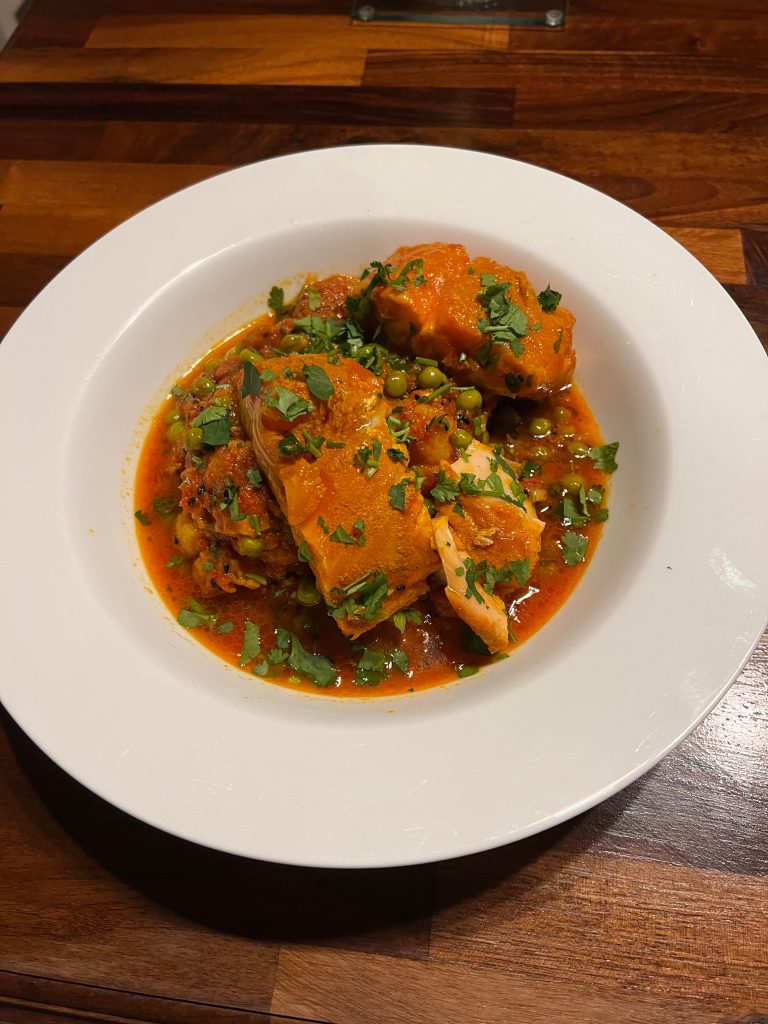
Chingri Do Piaza and Pumpkin Dal
A Bengali-style prawn curry — do piaza meaning double onions, cooked two ways for sweetness and body — served with a comforting, lightly spiced pumpkin dal. Fragrant, warming and satisfying.
Why this works
- Onions cooked two ways — some fried deep gold for the base, some added later — give the do piaza its sweet depth and texture.
- Cooking the prawns briefly at the end keeps them plump and tender rather than tough.
- A pumpkin dal alongside balances the spiced prawns with something soft, sweet and comforting.
Ingredient notes and swaps
- Raw prawns — added late so they stay juicy; king prawns look and eat best.
- Onions — the heart of the dish; be patient browning the first batch.
- Pumpkin or butternut squash — for the dal; it melts to a sweet softness.
- Red lentils — quick-cooking, for the dal base.
- Ginger, garlic, turmeric and cumin — the aromatic foundation; green chilli for warmth.
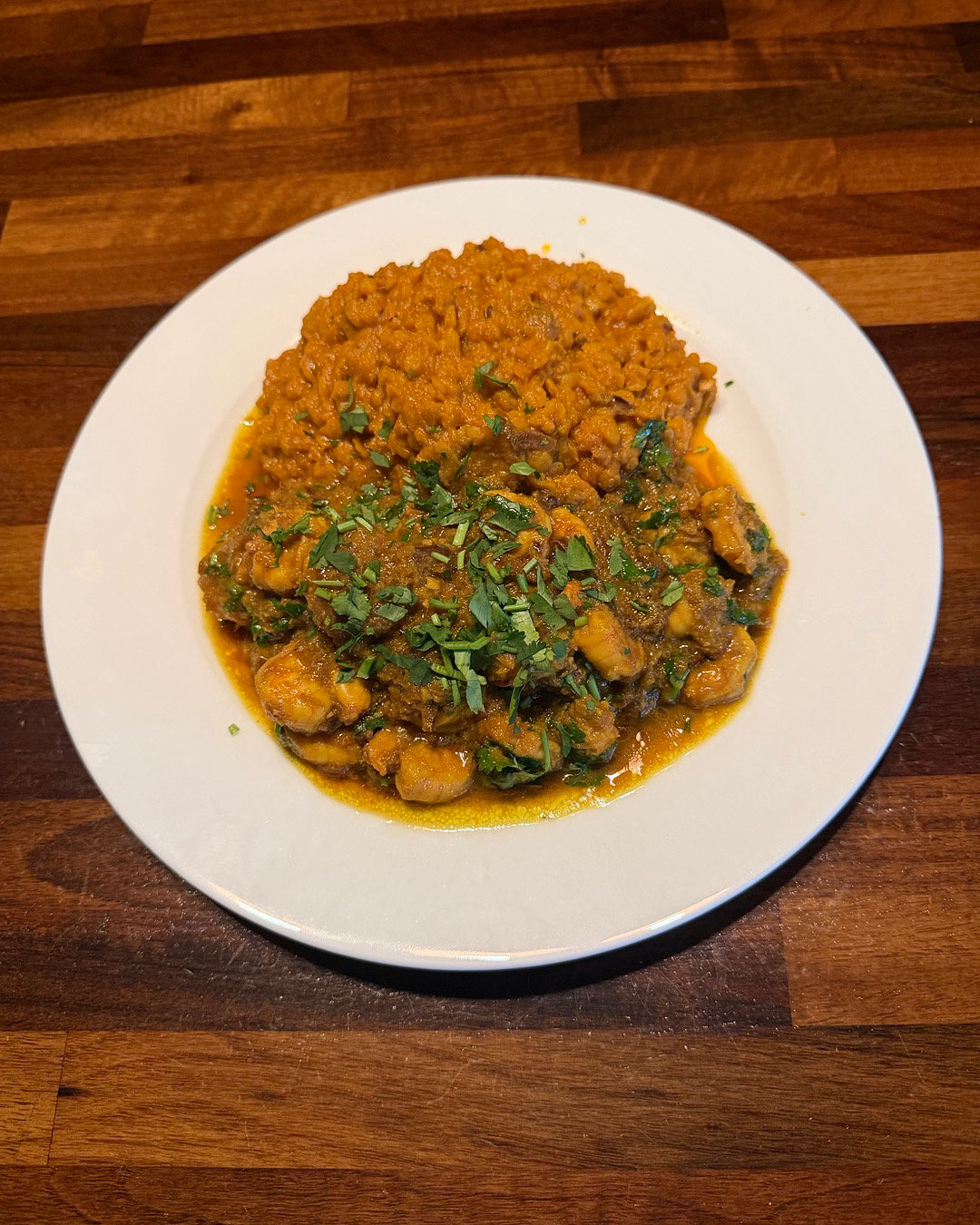
Chingri Do Piaza and Pumpkin Dal
FavouritePumpkin Dal has a savoury, slightly sweet, and warm flavour with notes of spice combined with the earthy taste of Lentils and the sweetness of Pumpkin. The dish has a rich and creamy texture, enhanced by the aromatics and a final tempering for a spicy finish.
Ingredients
Method
For the Chingri Do Piaza
- In a food processor, blitz the chopped Onions with the Ginger and Garlic.
- Heat the oil in a frying pan over a medium-high heat
- Add the sliced Onions and stir until they are nicely caramelised
- Add the Onion paste followed by the ground Spices and stir for a minute, then add the Salt and warm Water, and bring to the boil
- Reduce the heat to medium and keep stirring until the water reduces and the raw smell of the garlic is gone
- When the oil is visible around the edges of the onion mix, add the Prawns and Green Chillies, and continue to stir until the Prawns are pink and no longer translucent.
- Add the Lemon Juice and taste for seasoning
- Garnish with chopped fresh Coriander
For the Pumpkin Dal
- Wash the Lentils in several changes of cold water until the water runs clear
- Soak the Lentils for 30 minutes
- Drain well.
- Warm the Oil in a heavy-based pan that has a lid over a medium heat
- Add the sliced Onions and stir until they start to turn brown
- Add the Ginger and keep stirring.
- Add the Pumpkin Paste along with the Turmeric and Chilli Powder, and stir for a minute
- Add the Salt and the drained Lentils
- Stir for a few more minutes, then add the measured Water and bring to the boil
- Partially cover and reduce to a simmer for 10-20 minutes
- Leave the lid slightly ajar - you need to keep stirring the dal at regular intervals
- When the Dal and Pumpkin are cooked, remove the lid, add the Tomato Purée, and stir to ensure it does not get stuck at the bottom of the pan
- Take the Dal off the heat
- Temper the Dal before serving
- Heat the Ghee in a small frying pan over a medium heat
- Add the Cumin Seeds followed by the Chilli Flakes and then the Garlic
- Keep stirring to ensure the Garlic is cooked evenly
- When the Garlic starts to turn brown, tip the contents of the pan into the Lentils
- Taste for seasoning before serving.
Nutrition
Notes
For perfectly caramelised onions, be patient. Slow cooking develops a deep sweetness and rich colour.
Avoid overcooking prawns; they become rubbery quickly. Cook until just pink and opaque.
Stir the dal regularly, especially after adding tomato puree, to prevent sticking and ensure even cooking.
Avoid overcooking prawns; they become rubbery quickly. Cook until just pink and opaque.
Stir the dal regularly, especially after adding tomato puree, to prevent sticking and ensure even cooking.
Tried this recipe?
Let us know how it was!Tips for success
- Take your time browning the first onions — it is the flavour base of the whole curry.
- Add the prawns only in the final few minutes so they do not toughen.
- Cook the dal until the lentils collapse and the pumpkin is soft.
- Finish both with fresh coriander and a squeeze of lime.
Make ahead, storage and reheating
- Make ahead — the curry base and dal are better the next day; add the prawns when reheating.
- Storage — keeps three days in the fridge.
- Freezing — the dal freezes well; freeze the curry base without the prawns.
What to serve it with
- With basmati rice or warm flatbread, and the pumpkin dal alongside.
- A spoon of yoghurt and a fresh chilli for those who want more heat.
FAQ
What does do piaza mean? Literally double onions — onions used in two forms and at two stages for sweetness and body.
Can I use frozen prawns? Yes — defrost and pat dry, and add them right at the end.
No pumpkin — what else? Butternut squash or sweet potato both work beautifully in the dal.
Try these next
Build layered flavour — a guide to spices and how to use them
Kitchen Atlas
This is a taste of Indian cooking. Explore the whole cuisine — its story, key ingredients and more of our recipes — in the Kitchen Atlas.
Explore Indian in the Kitchen Atlas →