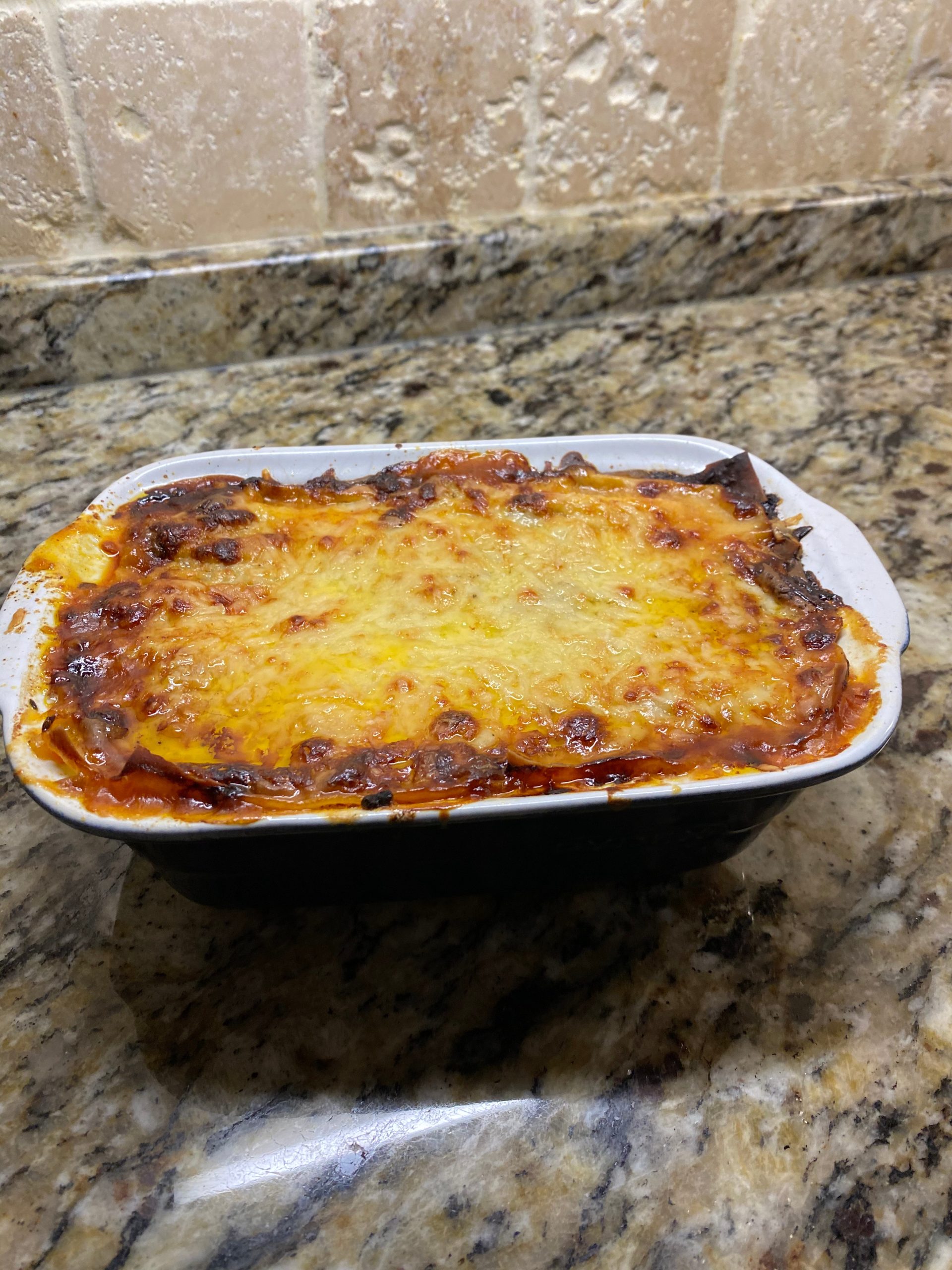
Lasagne
The proper homemade version — a slow, rich beef ragù layered with a silky, mustard-spiked béchamel and just enough pasta and cheese to hold it together. It takes a little time, but it is the lasagne that ruins you for the shop-bought sort, and it feeds a table.
From Recipes to Bank — the original ring binder where this site began, circa 2008.
Why this works
- A long-simmered ragù with stock, tomato and a spoon of redcurrant jelly builds deep, gently sweet savour — far beyond mince in a jar.
- A real béchamel (not a cheese sauce) with Dijon and Parmesan keeps the layers creamy and light rather than claggy.
- Restraint with the pasta and cheese — enough to bind, not so much it turns stodgy; the meat and sauce are the stars.
Ingredient notes and swaps
- Beef mince — a higher-fat mince (15 to 20 percent) gives a richer ragù; half pork, half beef is lovely too.
- Redcurrant jelly — a quiet trick for rounded sweetness; a teaspoon of sugar or a grated carrot does similar.
- Lasagne sheets — dried no-pre-cook sheets are easiest; fresh sheets need no soaking and cook quicker.
- Parmesan and mature cheddar — Parmesan in the sauce, cheddar on top for browning; all-Parmesan is fine if you prefer.
Lasagne
FavouriteIngredients
Method
- Heat a large frying pan until hot and add the oil.
- Cook the mince until browned all over.
- Remove from the heat and transfer to a plate
- Add the onion, celery (if using) and garlic to the pan and cook until softened
- Return the meat to the pan and stir in the flour
- Add the stock and bring to the boil.
- Add the redcurrant jelly (or sugar), tomato purée and thyme, then stir well.
- Stir in the canned tomatoes.
- Bring to the boil again, cover and simmer in the oven for 1-½ hours, or until the beef is tender.
- Melt the butter in a saucepan.
- Add the flour and cook over the heat for one minute
- Gradually whisk in the hot milk, whisking until thickened
- Add the Dijon mustard and parmesan cheese and season well with salt and pepper.
- Preheat the oven temperature to 200C/400F/Gas 6.
- Put one third of the meat sauce in the base of a 2.3 litre shallow ovenproof dish.
- Spoon one third of the white sauce on top.
- Arrange one layer of lasagne sheets on top.
- Season.
- Spoon half of the remaining meat sauce on top and then half of the white sauce.
- Put another layer of lasagne sheets on top, then the remaining meat sauce and remaining white sauce
- Season
- Sprinkle over the Cheddar Cheese.
- Leave for six hours before cooking so that the pasta can start to soften
Nutrition
Notes
A pinch of nutmeg in the white sauce will enhance its creamy flavour.
Always use good quality, fresh parmesan for the best results.
Tried this recipe?
Let us know how it was!Tips for success
- Brown the mince hard, in batches if needed — colour is the foundation of the ragù.
- Simmer the ragù low and slow; the longer the better, within reason.
- Whisk the hot milk into the roux gradually, off the heat, for a smooth béchamel.
- Rest the assembled lasagne 10 minutes before cutting so the layers set.
Make ahead, storage and reheating
- Make ahead: Assemble a day ahead and chill, or freeze before baking — ideal for entertaining.
- Storage: 3 days in the fridge; freezes up to 3 months (cooked or assembled-raw).
- Reheating: Cover with foil and warm through in a moderate oven until piping hot.
What to serve it with
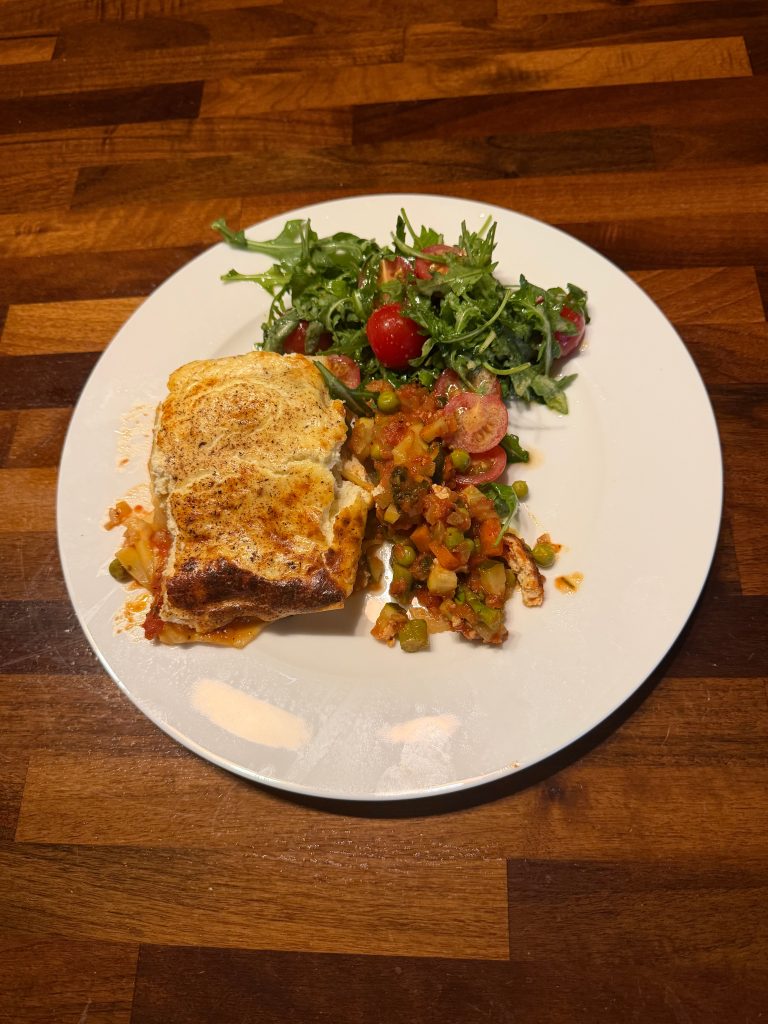
- A sharp green salad and good bread is all it needs. A robust Italian red — Chianti or Montepulciano — suits it well.
FAQ
Do I need to pre-cook the sheets? Not with no-pre-cook dried sheets or fresh ones; just make sure there is enough sauce to soften them.
Can I make it ahead or freeze it? Yes — assemble ahead and chill or freeze; it is a brilliant make-ahead.
Why béchamel rather than a cheese sauce? It is lighter and lets the ragù shine; cheese sauce can overwhelm.
How do I make it richer? Use a fattier mince, or half pork and half beef.
Try these next
The béchamel here is one of the five French mother sauces — brush up in our mother sauces guide, then explore more:
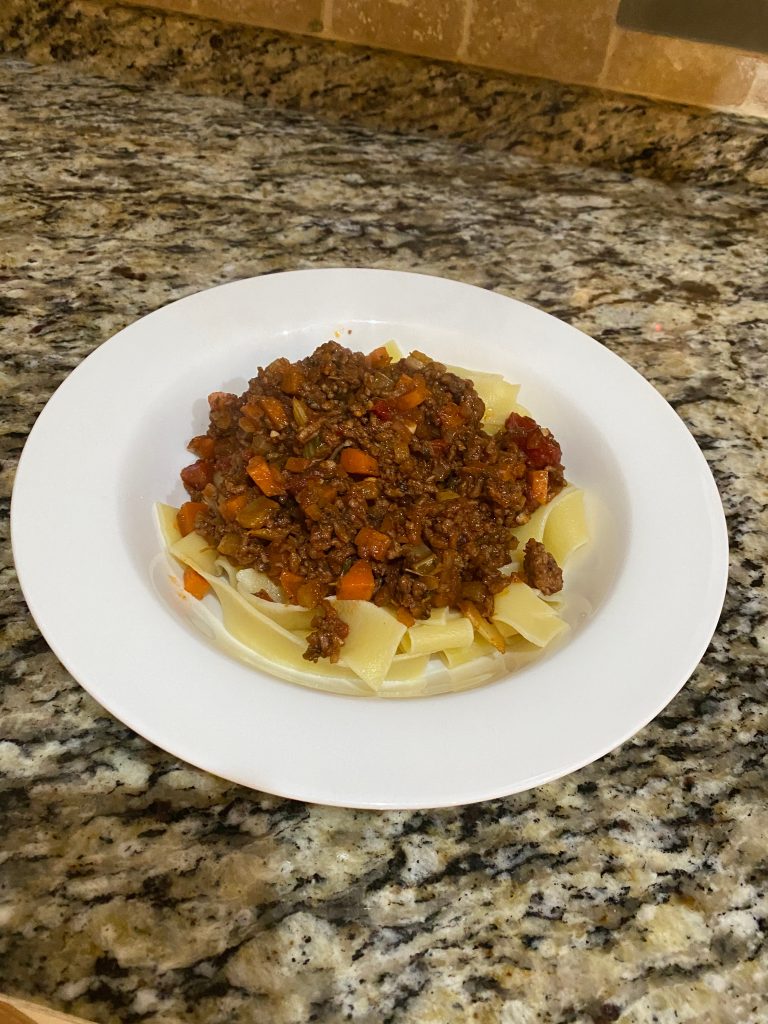
This is a taste of Italian cooking. Explore the whole cuisine — its story, key ingredients and more of our recipes — in the Kitchen Atlas.
Explore Italian in the Kitchen Atlas →