Tuscan Bean Salad
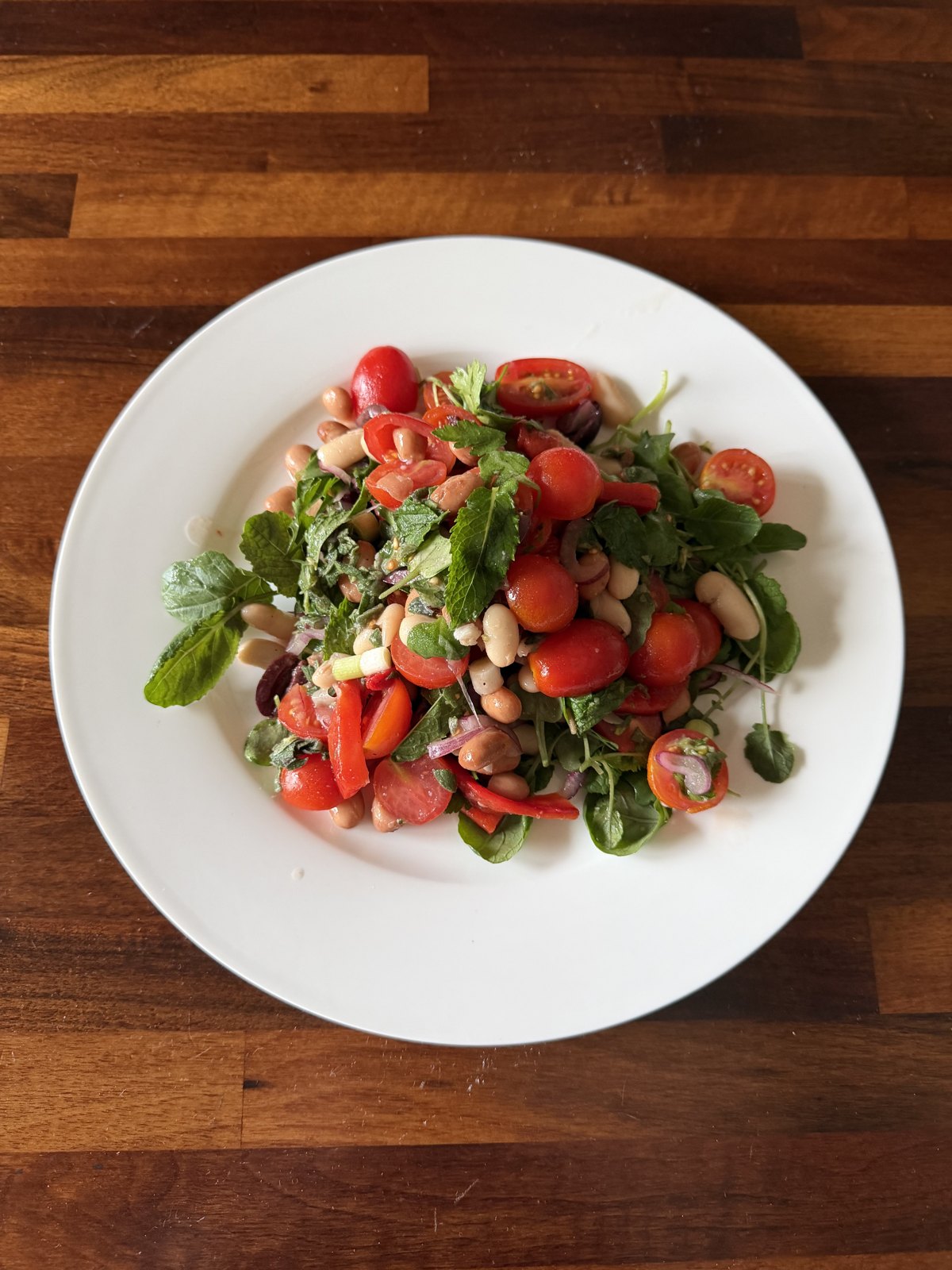
We had this for supper last night and I couldn’t not write it down. A Tuscan bean salad is what happens when it’s too warm to stand over the hob but you still want something that eats like a proper meal. Two tins of beans, whatever’s ripe and red in the kitchen, a fistful of herbs — and ten minutes later you’re at the table.
It’s honest, generous food. The beans are creamy and filling, the tomatoes and peppers bring the sweetness, and the dressing — peppery oil straight from the pepper jar, sharpened with red wine vinegar — pulls the whole plate together. No cooking, no fuss, and it happily feeds two as a light main or four alongside something from the grill.
Why this works
Beans are the quiet hero here. They carry a punchy dressing beautifully, so a bowl that could taste of very little instead tastes of everything you toss through it. Using two kinds — soft cannellini and nuttier borlotti — gives you contrast rather than one uniform texture. And because nothing is cooked, every element keeps its own character: the tomatoes stay juicy, the herbs stay fresh, the kale keeps its bite.
Ingredient notes and swaps
- The beans — cannellini and borlotti are the classic pairing, but butter beans, chickpeas or haricot all work. Tinned is genuinely fine; just drain and rinse well.
- Roasted peppers — the jarred ones are ideal, because you get to borrow their oil for the dressing. Roast your own if you’d rather.
- Herbs — parsley and basil are the backbone, and mint lifts it beautifully in summer. Use what you have, but be generous — this is a herb-forward salad.
- Baby garlic kale — rocket, watercress or baby spinach stand in happily if you can’t find it.
Tuscan Bean Salad
FavouriteIngredients
Method
- Place all of the ingredients, except the baby kale in a bowl and season to taste
- mix together thoroughly
- whisk together the dressing ingredients and season to taste
- pour the dressing over the ingredients in the bowl and toss gently
- add the baby garlic kale and toss to combine
- divide between two serving plates
Tried this recipe?
Let us know how it was!Tips for success
- Slice the red onion as finely as you can, or soak it in cold water for five minutes, so it lifts the salad rather than shouting over it.
- Whisk the dressing in a separate bowl and pour it over only just before serving — dress it early and the leaves wilt and the colours dull.
- Add the baby garlic kale right at the end and toss gently, so it keeps its bite and doesn’t bruise.
- Season in stages and taste as you go — beans take more salt than you’d think.
Make ahead and storage
You can get a head start by prepping the parts — halve the tomatoes, slice the onion and peppers, pick the herbs and whisk the dressing — and keeping them separately in the fridge. Bring everything together only when you’re ready to eat: toss with the dressing, add the kale last, and serve. Any undressed leftovers keep for a day, but it’s at its best made fresh, and it doesn’t freeze.
What to serve it with
On its own it’s a light lunch or supper for two. To feed more, pile it alongside something simple from the grill — grilled chicken, lamb koftas or a piece of fish — or serve it as part of a spread with good bread to mop up the dressing.
FAQ
Is it vegetarian? Completely — and vegan too, as it’s just beans, vegetables, herbs and oil.
Can I use dried beans instead of tinned? Yes — cook them until tender first. You’ll want roughly 240g drained weight of each.
Can I make it ahead? You can prep the components ahead — chop the vegetables, pick the herbs and whisk the dressing — but toss it all together with the dressing just before serving, adding the kale last, so the leaves stay crisp.
Can I freeze it? No — a fresh salad like this doesn’t freeze. It’s best eaten the day it’s made.
If you liked this
It’s a close cousin of our Tonno e Fagioli — roasted pepper, white bean and tuna salad, if you fancy a version with tuna stirred through. Both belong to the same sun-warmed corner of the Kitchen Atlas.
This is a taste of Italian cooking. Explore the whole cuisine — its story, key ingredients and more of our recipes — in the Kitchen Atlas.
Explore Italian in the Kitchen Atlas →