Cacio e Pepe
Rome’s great four-ingredient pasta — just pasta, pecorino, black pepper and a little butter, brought together with starchy pasta water into a glossy, peppery, cheese-coated bowl. It sounds impossibly simple, and the magic is all in the technique.
Why this works
- Starchy pasta water is the secret — it emulsifies the cheese and butter into a silky sauce that clings to every strand.
- Toasting the pepper in butter blooms its aroma and gives the dish its signature warmth.
- Pecorino, finely grated melts smoothly into the sauce; its salt and tang do all the seasoning.
Ingredient notes and swaps
- Bucatini or spaghetti — bucatini is traditional, but any long pasta works.
- Pecorino Romano — sharp and salty, the authentic cheese; parmesan is milder but fine.
- Black pepper — freshly, coarsely ground, and plenty of it; it is a main flavour, not a seasoning.
- Pasta water — do not tip it all away; you need that starchy liquid to make the sauce.
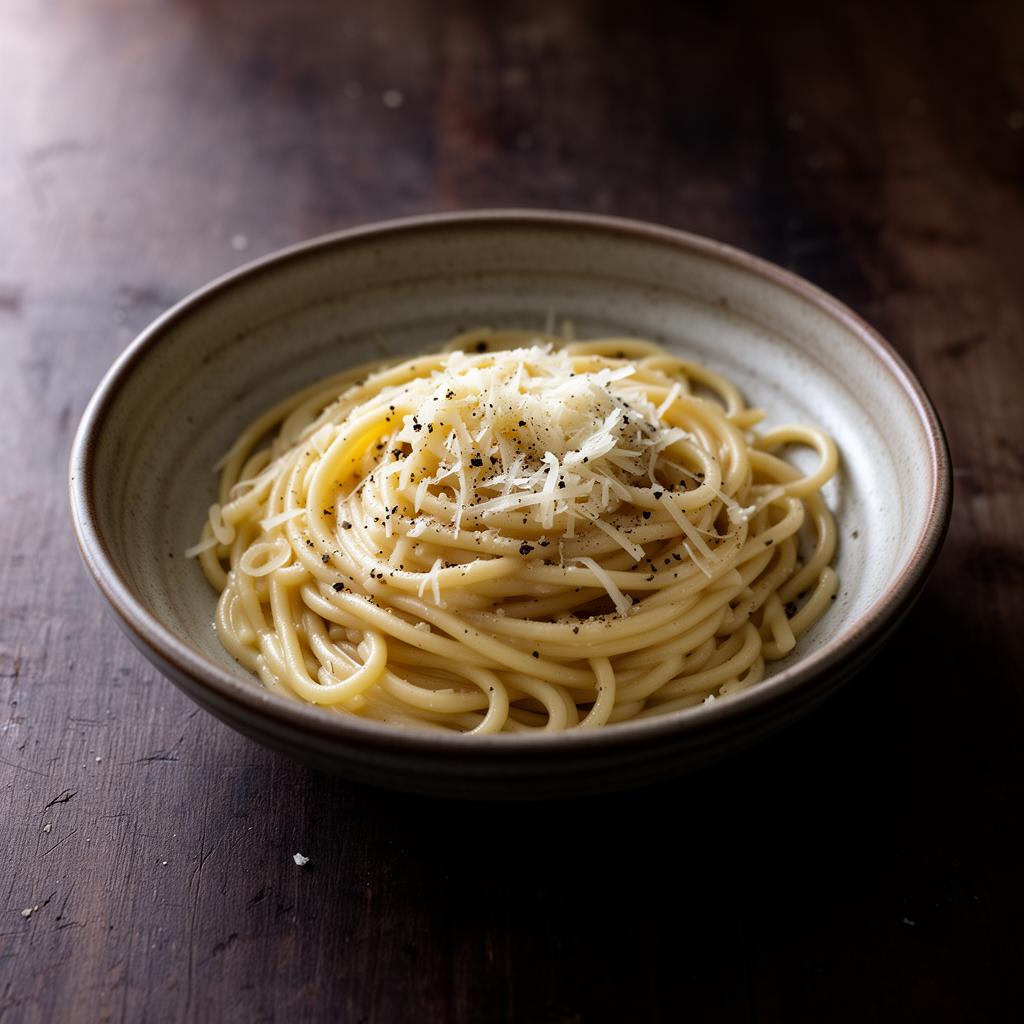
Cacio e Pepe
FavouriteIngredients
Method
- Cook the pasta for 2 minutes less than the pack instructions state, in well-salted boiling water.
- Meanwhile, melt the butter in a medium frying pan over a low heat, then add the ground black pepper and toast for a few minutes.
- Drain the pasta, keeping 200ml of the pasta water.
- Tip the pasta and 100ml of the pasta water into the pan with the butter and pepper.
- Toss briefly.
- Scatter over the pecorino evenly, but don't stir — wait for the cheese to melt for 30 seconds, then toss everything well and stir together.
- This prevents the cheese from clumping or going stringy and makes a smooth, shiny sauce.
- Add a splash more pasta water if you need to, to loosen the sauce and coat the pasta.
- Serve immediately with a good grating of black pepper.
Nutrition
Notes
Resist the urge to stir the cheese in immediately! Allowing it to melt for 30 seconds before tossing ensures a smooth, emulsified sauce and prevents clumping or a stringy texture.
Tried this recipe?
Let us know how it was!Tips for success
- Undercook the pasta slightly — it finishes in the sauce.
- Keep back plenty of pasta water and add it a splash at a time to loosen the cheese into a cream.
- Take the pan off the heat before adding the cheese, or it can clump rather than melt.
- Work quickly and toss hard — the emulsion comes together with movement.
Make ahead, storage and reheating
- Make ahead: Not one for ahead — it is cook-and-serve-immediately.
- Storage: Best eaten straight away; it does not keep or reheat well.
- Reheating: Not recommended.
What to serve it with
- It is a course in itself, traditionally eaten alone so the simplicity shines. A crisp green salad after, Italian-style.
FAQ
Why will my cheese not melt smoothly? Too much heat — take the pan off and use pasta water to bring it together gently.
Pecorino or parmesan? Pecorino is traditional and sharper; parmesan is milder but works.
What is the pasta water for? Its starch emulsifies the cheese and butter into a silky sauce — essential.
Can I make it ahead? No — it is a last-minute dish, best eaten straight from the pan.
Try these next
Nail the basics with our How to cook pasta guide, and explore more in the Italy chapter of our Kitchen Atlas — then put it to work:
This is a taste of Italian cooking. Explore the whole cuisine — its story, key ingredients and more of our recipes — in the Kitchen Atlas.
Explore Italian in the Kitchen Atlas →